Johny El-Achkar, Maya El-Gharib, Nesrine Ahmad, Samar Al-Hajj (Author)
Introduction
Road Traffic Injury (RTI) pose a significant health challenge. It represents the eighth leading cause of death globally, prompting the UN to designate 2011-2020 as the “Decade of Action for Road Safety”. This study aims to determine the global and regional burden of RTIs, and the impact of drink-driving and seatbelt-wearing on RTIs in 2017, while also assessing the UN Action Plan outcomes and forecasting the RTI rate for 2029.
Methods
Data on the global and regional RTI rates (2000-2019), regional seatbelt use (2017), and regional drink-driving (2017) were compiled from the Global Health Observatory Estimates. The investigated key metrics are global and regional RTI rate per 100,000 population in 2000-2019, percentage of regional seatbelt-wearing, drink-driving RTIs, and enforced seatbelt and drink-driving laws in 2017.
Results
This study reveals a heterogenous regional distribution of road traffic injuries in 2017. Africa sustained the highest RTI rate (27.6/100,000 population), while Europe reported the lowest rate (10.98/100,000 population). Regional variation in seatbelt laws exists, with the highest legalization in Europe (100%), and the lowest in Western Pacific (80.95%). Eastern Mediterranean (87.43%) and South-East Asia (46.8%) reported the highest and lowest driver seatbelt-wearing rates, respectively. All countries, except the Maldives, legislated drink-driving laws. Western Pacific (29.98%) and Eastern Mediterranean (1.65%) suffer from the highest and lowest burden of drink-driving RTI, respectively.
Conclusion
Despite a relatively stable global RTI rate from 2011-2020 and a steady decline till 2029, the future trajectory
remains uncertain in developing countries bearing the highest burden, due to slow national law enforcement,
rendering the UN Action Plan insufficient in curbing the burden of RTIs.
INTRODUCTION
Road traffic injury (RTI) is a major global health challenge, impacting millions of individuals worldwide [1]. With approximately 20-50 million non-fatal injuries, 70 million disability-adjusted life years (DALYs), and 1.3 million deaths annually, RTI remains a neglected yet major health problem globally [1, 2]. According to the World Health Organization (WHO), RTI is ranked the 6th and 8th leading cause of DALYs and mortality globally, respectively [1, 3, 4]. The current steady RTI trends suggest that traffic fatalities are expected to become the 7th leading cause of death worldwide by 2030 [4].
RTI imposes a real threat to the health and well-being of all populations across all age groups, with a particularly heightened burden on the youth population [5]. In fact, RTI constitutes the primary cause of death for people aged 5 to 29 years; the majority of victims were among the male populations compared to their female counterparts [1, 2, 6]. Existing literature identifies multiple factors that contribute to the increased rate in RTI mortality and morbidity among the youth and the males’ population, including the tendency to violate traffic laws such as traffic signals, and the lack of seatbelts/helmets use, in addition to the potential engagement in high-risk driving behavior, including car racing and drink-driving [7-10]. Females are relatively safer drivers at all times (day/night), and in all road conditions (i.e. weather, road layout, etc.), which decreases their risk of sustaining road fatalities, with nearly 3 times less likelihood of females being killed in road traffic crashes [1, 11, 12].
Besides the health impact, RTIs inflict a serious economic and societal toll on individuals, families, and communities, incurring large direct and indirect costing reaching up to 3% of most countries’ gross domestic product (GDP) [1]. The human and economic loss associated with RTI is disproportionately more prominent in low- and middle-income countries (LMICs), where 93% of road traffic deaths (RTI) occur [1]. The latter is explained by several factors, including the high proportion of vulnerable road users, such as pedestrians and cyclists, the absence of road safety regulations, and the extensive illiteracy and defiance of laws in LMICs [8]. RTIs are expected to further rise in LMICs with the increasing motorization and urbanization [10].
In addition to environmental factors, human behavior is responsible for the majority of road crashes [13, 14]. Human observation, interpretation, and planning errors further predispose individuals to traffic crashes and impact injury severity and outcome [14]. Various factors are associated with RTIs including speeding, fatigue, poor driving skills, alcohol and substance consumption, poor vehicle conditions, violation of traffic laws (i.e. improper seatbelt/helmet/child seat use, use of mobile phone while driving, disregarding traffic signs, etc.), unsafe road environments (i.e. bad weather, poor infrastructure, poor lighting, lack of pedestrian facilities, etc.), and inadequate post-crash care (i.e. first aid care, fast access to medical personnel, rehabilitation services, etc.), amongst others, contribute to increased traffic mortalities and morbidities [2, 13]. Enforcing the required measures of road safety and adopting safer road behavior substantially reduce road traffic crashes and subsequently prevents RTIs [1].
Alcohol use, even in insignificant amounts, impairs the cognition, vision, and reaction time of all consumers [4, 10, 15]. Accordingly, blood alcohol concentration (BAC) above zero has been identified as a primary risk factor in the causation and severity of traffic crashes for all road users, including motorists and pedestrians [15]. Notably, drink-driving with a BAC greater than 0.04 g/dl results in severe behavior impairments associated with reckless driving, speeding, unfastening seatbelt/helmet, and disobeying traffic laws, and in turn dire traffic crashes and injuries [1, 15]. Alarmingly, approximately 20% of traffic fatalities in high-income countries and 33-69% of traffic deaths in LMICs are attributed to alcohol consumption, predominantly affecting young and novice drivers [10, 16]. Several countries including Canada, Australia, and Italy have adopted strategies to reduce RTI injuries and deaths among this high-risk group including the decrease of the BAC limit to ≤0.02 g/dl for young and/or novice drivers. This policy lead to a substantial reduction in traffic crashes by up to 24% [2, 4]. Other RTI reduction successful measures were implemented by over one hundred countries to reduce drink-driving include public awareness, random breath testing, and police sobriety checkpoints [4, 17]. Yet, given that LMICs are currently exposed to the growing use of alcohol, hardly any developing countries have enforced measures to control drink-driving [18]. Assessing the contribution of drink-driving on RTIs is crucial to develop prevention strategies, though data on drink-driving remains limited in the majority of LMICs and some high-income countries (HIC) [2, 4].
While functional seatbelt laws and increasing compliance are enacted in more countries compared to drink-driving laws, many LMICs lack mandatory safety requirements with limited law enforcement and compliance [2, 4, 19, 20]. The WHO, the FIA Foundation, and partners, have highlighted the urgent need to increase seatbelt and child restraint use, particularly in LMICs experiencing rapid motorization. Seat-belts can reduce vehicle occupant deaths by up to 50%, while child restraints can prevent up to 71% of fatalities among infants. Despite high compliance in regions such as Europe, usage remains low in other regions. Updated WHO guidelines, as noted by Dr. Khayesi, emphasize comprehensive programs combining legislation, enforcement, and public education to promote seatbelt use and convince governments and citizens of such need [23, 24].
Since the vast majority of RTIs are both predictable and preventable, global efforts have been concerted for decades to address the burden of traffic fatalities and injuries [2, 4]. Almost 123 countries, representing around six billion people, amended laws on at least one of the five key risk factors of road injuries, such as speeding, seatbelt and helmet use, child restraint use, and drink-driving [2]. HICs succeeded in reducing the toll of RTIs by relying on data-driven evidence and resources to inform strategic safety rules and regulations [2]. With the lack of adequate data on any traffic crash-related risk factor, such as alcohol consumption and seatbelt use, LMICs continued to mismanage RTIs and traffic deaths [2, 4]. Accordingly, the United Nations (UN) General Assembly launched the Decade of Action for Road Safety 2011–2020, with a target to save 5 million lives by the year 2020 [25]. This approach focused on five main pillars: road safety management, safer roads, safer vehicles, safer road user behavior, and post-crash care [25]. Evaluating the success of this plan is key to developing successful future strategies regarding traffic injuries and deaths worldwide.
This study aims to describe the current burden of road injuries worldwide, for the period from 2000 to 2019, to highlight the impact of two major risk factors including alcohol consumption and seatbelt usage in 2017, and to forecast the future trends in road traffic deaths. It further assesses whether the period ranging between the years 2011 and 2020 was indeed the “Decade of Action for Road Safety” as proclaimed by the UN General Assembly. Findings from this study help to suggest reliable measurements that can be implemented globally and nationally to reduce and mitigate injuries and deaths on the roads.
METHODS
Data Sources
Data were retrieved from the Global Health Observatory Estimates generated by the WHO for Information, Evidence, and Research. Data on six regions (Americas, Africa, Europe, Eastern Mediterranean, South-East Asia, and Western Pacific) were extracted and analyzed [26]. Data posted by WHO on seatbelt wearing rate and attribution of RTIs to alcohol were only available for the year 2017. Road traffic mortality rates and the estimated number of deaths worldwide are reported for the time falling between the years 2000 and 2019.
Data Processing
The collected data were processed using Power BI (Microsoft, Redmond, USA). Power BI is an interactive data visualization software product developed by Microsoft and focuses on business intelligence [27]. To build the dashboard, the following datasets were uploaded and used: estimated number of RTIs per gender, estimated RTI rate per gender (per 100,000 population), seatbelt use rate (%), the impact of RTIs on alcohol (%), and drink-driving existing national law (Binary yes/no), road safety strategy (Binary yes/no), and seatbelt law (Binary yes/no). All data attributes had a categorical parent location (i.e., region), location (i.e., country), and numerical period (i.e., year).
Before data visualization using Power BI, data were compiled, uploaded, and preprocessed. A unique identifier (composite key) was created for the first four tables on the dashboard. The key encompasses the location and period (e.g. Afghanistan2000). The created identifiers were used to link the tables, and ultimately create the dynamic dashboard. For data visualization, parent location, location, and period, were then referred to as region, country, and year, respectively.
The key metrics that were investigated in this study are as follows: RTIs rate (per 100 000 population) during the period 2000-2019, average regional RTI rate (per 100 000 population) and percentage in 2000-2019, percentage of driver seatbelt wearing rate (%) in 2017 per region, percentage of drink-driving RTIs (%) in 2017 per region, and the percentage of legalization of seatbelt use and drink-driving laws per region.
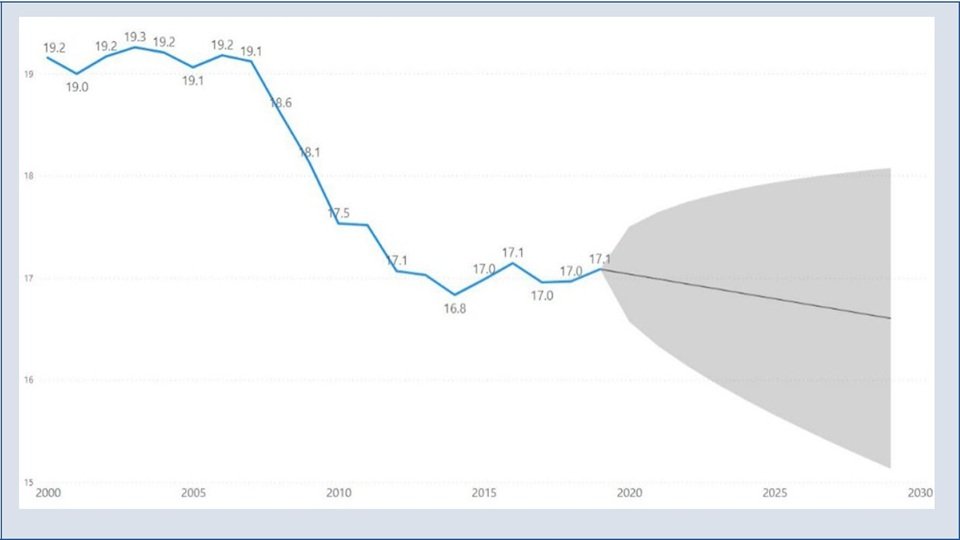
As for the projection, it was generated using a linear regression model based on historical data of road traffic fatalities. The model assumes a consistent trend over time and extrapolates future values accordingly. This approach was chosen to provide a basic forecast of the potential trajectory if current patterns persist, recognizing that more complex models were beyond the scope of this study.
RESULTS
Of the six regions examined, Africa sustained the highest burden of RTIs with 27.6 RTIs per 100,000 population between 2000 and 2019, followed by the Eastern Mediterranean region (EMR) with 21.05 RTIs per 100,000 population. South-East Asia (16.95 RTI per 100,000) and the Americas (16.5 RTI per 100,000) suffered from a comparable rate of road traffic injuries, while Western Pacific and Europe sustained only 13.51 RTI per 100,000 and 10.98 RTI per 100,000 of RTIs during the same period, respectively (Table 1).
Inversely, Europe reports 82.1% driver’s seatbelt compliance in 2017 (62.72% of European countries reporting this rate). With 53.33% of American countries reporting this measure, the driver’s seatbelt-use rate was 67.23% in 2017. Although the seatbelt-use rate of drivers in the EMR was high in 2017 (87.43%), only 4 out of 19 EMR countries (21.05%) disclose relevant statistics. Africa has the lowest reporting rate (18.18% of African countries reporting) and average driver seatbelt-use rate (47.78%) compared to other regions. With relatively moderate reporting, South-East Asia, and the Western Pacific regions (30 and 38.1% countries reporting, respectively) disclose a 46.8% and 77.66% seatbelt compliance rate in 2017, respectively (Table 2).
Assessing the contribution of alcohol consumption to RTIs in 2017 across different regions revealed that Western Pacific (29.98% attribution with around 71.42% countries in the Western Pacific reporting their numbers) suffers from a relatively large burden of drink-driving RTIs compared to other regions, particularly EMR (1.65% attribution with 42.1% countries in EMR reporting their numbers). With an average reporting of 43.33% of the countries in the Americas, alcohol consumption was linked to 16.91% of their RTIs in 2017. Africa (14.35% attribution with only 25% of countries in Africa reporting their numbers), followed by South-East Asia (13.2% attribution with 30% of countries in South-East Asia reporting their numbers) and Europe (12.97% attribution with 76.47% countries in Europe reporting their numbers), suffered from relatively moderate drink-driving RTIs in 2017 (Table 2).
In 2017, all European, African, American, EMR, South-East Asian, and Western-Pacific countries have existing national drink-driving laws, except the Maldives in South-East Asia (Figure 1).
A clear discrepancy exists between regions when assessing the presence of national seatbelt laws across all countries in 2017. All European countries have established seatbelt safety laws. Americas (93.33%), followed by South-East Asia (90%), EMR (89.47%), and Africa (88.64%), further established seatbelt safety policies. Yet, only 80.95% of the Western Pacific region countries successfully adopted such laws to increase seatbelt wearing in 2017 (Figure 2).
Although the overall RTI burden declined from 19.2 RTIs per 100,000 population in the year 2000 to 17.1 RTIs per 100,000 population in the year 2019, this rate insignificantly fluctuated (≈ 17.1 RTIs per 100,000 population) during the period between 2011 and 2020. Forecasting the overall global burden of RTIs from the year 2020 till the year 2029 revealed that the RTI rate is expected to steadily decrease (Figure 3).
DISCUSSION
This study explored the global distribution of RTIs across different regions. It further examined the impact of various risk factors on RTIs including driver seatbelt use and drink-driving. Evidence from this study will be key to assessing the degree of success of the “UN Decade of Action for Road Safety Plan” from 2011 to 2020, and further facilitates the prediction of the upcoming pattern of global rates of traffic injuries and fatalities.
Consistent with previous studies, a substantial discrepancy in the burden of RTI existed between different regions [22, 28, 29]. Despite the global increase in traffic jams and the use of motor vehicles, Africa sustains a three-time higher risk of RTIs compared to Europe. This can be attributed to the strong link between traffic injuries and fatalities, and the country’s income level [28], as well as the diverse terrain in Africa which was associated with increased risk of RTIs [30-32].
Interestingly, RTI depicted an increasing trajectory with increasing GDP in LMICs, and decreasing patterns with an increased GDP in HICs [28]. One study suggests that besides the growing mobilization in developing countries, the common hazardous driving, unsafe roads, and the high proportion of vulnerable road users, collectively increase the prevalence of local RTIs [8, 28]. Developed countries can mitigate this burden with the establishment of safer roads, efficient road safety policies, and enhanced emergency transport and medical treatment [28]. Accordingly, the classification of the majority of the African and EMR countries as low and lower-middle-income countries explains the high RTI rate, compared to upper-middle and high-income countries in Europe, the Americas, Western Pacific, and South-East Asia [33].
The varying RTI toll across regions is found to be further associated with informing and enforcing regional and national road safety policies. While a portion of the burden lies on the government’s inefficient and limited resources to invest in road safety, human behavior predominantly contributes to RTIs [34]. Among the leading risk factors of RTIs are drink-driving and failing to use seatbelts among vehicle occupants and child restraint systems [35]. Findings from this study reveal that although all countries, except the Maldives, had established drink-driving laws in 2017, alcohol consumption still majorly contributes to RTIs globally. Aligned with existing studies, the Eastern Mediterranean Region sustains the lowest burden of drink-driving injuries and mortalities [36, 37]. In addition to the national laws, the strict cultural and Muslim religious practices in most EMR countries prohibit drinking and restrict alcohol consumption [36].
On the contrary, drink-driving remains an increasingly major concern in other regions, particularly the Western Pacific, followed by the Americas and Africa. The elevated alcohol-attributable burden of RTI in the Western Pacific region is associated with the uppermost alcohol consumption rates in many countries like Tongo, Cooks Island, Australia, Papua New Guinea, and New Zealand [36, 37]. An existing study suggests that more than half of the RTIs in Papua New Guinea and Tongo, and one-third of the RTIs in Australia and New Zealand in 2017 are attributed to alcohol consumption above the legal limit [36]. A similar trend is seen in the Americas and Africa where alcohol use massively increased during the past decade, thus chiefly contributing to the toll of RTIs in countries like Canada, the USA, and South Africa [35, 36].
According to the WHO, 45 countries including Brazil, Canada, New Zealand, and Australia, in addition to the majority of European countries like France, established drink-driving laws meeting the best practices (BAC ≤ 0.05 g/dl and BAC for young/novice drivers ≤ 0.02 g/dl) [2]. By monitoring the patterns of traffic injuries and fatalities via injury registries, such countries were capable of further legislating and amending country-specific policies [38]. Not only did Brazil restrict the BAC limit (0 g/l), it further mandated random breath testing, doubled the fines for drink-driving, and enhanced police power, to reduce the burden of RTIs [2, 39]. In France, driving under the influence of alcohol remains the second leading cause of traffic fatalities [40]. One French-based study showed that 90.7% of alcohol-positive subjects had an alarmingly high BAC (>0.08 g/dl) while driving [41]. Accordingly, without effective law enforcement and safer road user behavior, notably through compulsory random breath testing, efforts to address drink-driving remain inefficient [22, 28, 38].
Evidence from this study reveals that legislation and implementation of seatbelt use are critical to reducing the global burden of RTIs. A previous study assessing the impact of human behavior on seatbelt use found that seatbelt non-use is positively associated with severe traffic injuries and deaths [42]. Improper driver seatbelt use has been found to increase traffic fatalities by 45-50% [2]. The relatively low toll of RTIs in Europe can be associated with the full establishment of mandatory seatbelt-use laws, and with the high driver’s seatbelt-use rate. The latter reflects mature road user behavior, where the level of literacy and awareness, among other factors such as the law penalty and residing in urban areas, were found to be positively associated with seatbelt use [34, 43]. The interventions to increase the use of seatbelts in HICs, including enhanced police training and enforcement, public awareness, and health education, further improved seatbelt-use compliance [44]. Europe further adopted mandatory installation of seatbelt reminder systems, as studies showed that this method is highly effective in enforcing seatbelt use [45].
Collectively, with the recent increasing motorization, high illiteracy, inadequate seatbelt-use laws, and the absence of intervention strategies in many LMICs, the toll of RTIs in developing regions, like Africa and South-East Asia, continues to rise [44, 46]. The assessment of intervention strategies in LMICs must account for country-specific factors, such as barriers, cost, and sustainability, making HICs’ intervention strategies untransferable [34]. In this regard, culture and religion are two significant factors to investigate. Existing studies report that the strong belief in fate and destiny in Africa, South-East Asia, and EMR has been linked to riskier driving and seatbelt non-use [47-52]. Other studies found that religiosity is positively associated with better self-protection practices such as seatbelt use and no alcohol consumption [53, 54]. Implementing national research-based customized awareness campaigns and policies must address such research gaps. However, the presence of limited data in LMICs represents another major barrier to the understanding and assessment of RTIs [2].
Although our analysis covers data only up to 2019, the Global Status Report on Road Safety 2023 confirms that recent global trends continue to show growing disparities [55]. While the global target of halving road traffic deaths between 2011 and 2020 was not achieved worldwide, 10 countries, including Belarus, Brunei Darussalam, Denmark, Japan, Lithuania, Norway, the Russian Federation, Trinidad and Tobago, the United Arab Emirates and Venezuela, did achieve reductions of at least 50% in fatalities. A further 15 countries saw decreases of 40–49%, 20 countries had decreases of 30–39%, and 33 countries reduced deaths by 20–29%. The European Region experienced the largest overall decline, with a 36% decrease in road traffic deaths, and the Western Pacific Region reported a 16% reduction. These successes coincide with countries that have broadly implemented “safe system” approaches, combining comprehensive legislation, enforcement and infrastructure improvements. When adjusted for population growth, the global fatality rate also declined from nearly 18 per 100 000 people in 2010, to about 15 per 100 000 in 2021, a 16% reduction.
By contrast, many LMICs, especially those in the African Region, have not seen comparable progress. During the same period, 66 countries reported increases in road traffic deaths, including 28 in Africa, where fatalities rose by 17% overall. The African Region continues to have the highest death rates globally, and more than 90% of all road traffic fatalities still occur in LMICs, with pedestrians, cyclists and motorcyclists making up more than half of the victims. These figures highlight a persistent imbalance: the policies and investments that have successfully reduced deaths in high-income settings have not been implemented, or have been far less effective, in resource-constrained contexts. Without targeted support, stronger enforcement, and scaled-up investment in road safety for LMICs, particularly in Africa, the global goal of halving road traffic deaths and injuries by 2030 is unlikely to be equitably achieved. According to the WHO, global progress was slow to allow the anticipated reduction in RTIs as on-ground implementation was limited, especially in LMICs. This heterogeneity can be attributed to the funding gap, poor civic engagement, and governmental support in many LMICs [56, 57]. Besides setting an action plan, political commitment and public support are key to the successful enforcement of good practices and intervention strategies [57]. The lack of global and national data regarding RTI and its relative risk factors, like seatbelt use and drink-driving, especially in LMICs, further misled the progress of the “UN Decade of Action for Road Safety (2011–2020)” [2].
Investing in health policy research is important to reduce the burden of road traffic injuries. Relevant and representative data should be collected especially from countries where RTIs continue to increase, like Paraguay, Chad, and Pakistan [22]. The European Transport Safety Council has adopted evidence-based research to improve transport safety in Europe [22]. In the USA, the Insurance Institute for Highway Safety conducted extensive science-based multidisciplinary research to employ low-cost road safety programs to enhance traffic safety [22]. Building on these examples, increasing the routine use of proven child safety measures, such as booster seats, bicycle helmets, and graduated driver licensing, can save governments and payers substantial medical and productivity costs. However, these interventions remain underutilized due to barriers such as split savings across payers, long payback periods, and political or practical challenges [58].
Based on the marginal global improvement of traffic safety during the past decade and the continuous international and national efforts to reduce RTIs, this study forecasted a steady decrease in the global rate of RTIs in the upcoming years until 2029. A comparable pattern was obtained in a previous study, where the rate of RTIs was estimated between the years 2017 and 2030. Specifically, the rate of RTI was forecasted to decline by 12%, from 16.3 RTIs per 100,000 population in 2017 to 14.3 per 100,000 population in 2030 [59]. An existing study further predicted a steady decrease in the global rate of pedestrian road-traffic injuries between 2020 and 2030, indirectly imposing a similar reduction pattern of RTIs [60]. Regardless, this estimation might not apply if drastic measures and technologies were implemented during this period, or if global and national efforts were halted.
This study has some limitations and strengths. A key limitation is that data in many countries are underreported. The missing data from all regions, particularly from LMICs in Africa and EMR, further limited this study. This might underestimate the burden of traffic injuries in many countries, thus altering the design of efficient intervention strategies to reduce RTIs. Another limitation of this study is that it disregards the political and socio-economic discrepancies between countries in the same region. Thus, even if the regional RTI rate declined, some countries might report an increasing burden due to country-specific factors. Also, the collective association and effect of other risk factors have not been studied. This study did not assess the cost-effectiveness of the proposed interventions, which limits the ability to determine their practicality across different economic settings. The use of a linear regression model assumes a consistent trend, which may not capture sudden policy changes, technological advancements, or other external shocks that could influence road safety outcomes.
On the other hand, this study's strengths reside in using advanced data visualization software to process, manage, analyze, and visualize the data. Power BI helped create data models and relationships between the imported datasets. Moreover, its predictive analytics feature provided estimates of RTIs in the coming years, thus encouraging proactive measures to be taken to help curb the RTI phenomenon. This study further provides a global as well as a regional view of the RTI phenomenon in terms of seatbelt-use wearing rate and alcohol consumption rate, two of the major risk factors of RTIs.
This study’s overview of the current global and regional distribution of RTIs shows an alarming heterogonous burden. Findings from this study urge policymakers and stakeholders to adopt and enforce safer and more efficient road policies and intervention strategies, and citizens to practice safer and more responsible road traffic behavior.
Recommendations
Based on these findings, actionable strategies should be prioritized, especially in LMICs. First, establishing a standardized and sustainable national road injury surveillance system is crucial to overcome data gaps and accurately guide interventions. Second, governments should consider implementing low-cost, research-informed campaigns tailored to local culture and beliefs to address key risk factors. For example, partnerships with community leaders may help reinforce positive behaviors. In addition, we recommend investing in capacity-building for local law enforcement and emergency services to reduce the burden of RTIs globally.
CONCLUSION
The future of road safety is expected to show a steady decrease in RTI rates globally, but this trajectory will remain heterogeneous across regions and countries. With the lack of strong enforcement of evidence-based intervention strategies, the burden of road traffic injuries and fatalities will remain high in developing countries. Minor changes in road safety behavior, such as seatbelt use, will significantly accelerate the reduction of the RTI rate, particularly in LMICs. The high rates of drink-driving and low rates of seatbelt use globally should be addressed via collective global, governmental, and societal efforts.
The socioeconomic discrepancies should be considered during legislation to secure large-scale adoption of safety measures and enforcement of road safety laws at a national level. The alarmingly high missing data reported in this study call for reliable national data registries to ensure the success of the current “UN Decade of Action for Road Safety (2020-2030)” via country-specific intervention strategies.
Author contributions
All authors contributed equally and validated the final version of record.
Declarations
Conflicts Of Interests
The Authors declare that there is no conflict of interest.
Funding
This research received no specific grant from any funding agency in the public, commercial, or not-for-profit sectors.
Registration
No registration applicable.
Data availability statement
The data that support the findings of this study are available from the corresponding author upon reasonable request.
Ethical approval
Ethical approval for this study was not required.
References
1. Road traffic injuries. World Health Organization; 2022.
2. Global status report on road safety 2018 [Internet]. Geneva: World Health Organization; 2018. Available from: https://www.who.int/publications-detail-redirect/9789241565684
3. Chang FR, Huang HL, Schwebel DC, Chan AHS, Hu GQ. Global road traffic injury statistics: Challenges, mechanisms and solutions. Chin J Traumatol. 2020 Aug 1;23(4):216–8. https://doi.org/10.1016/j.cjtee.2020.06.001.
4. Global status report on road safety 2015 [Internet]. World Health Organization; Available from: https://www.afro.who.int/publications/global-status-report-road-safety-2015.
5. Suphanchaimat R, Sornsrivichai V, Limwattananon S, Thammawijaya P. Economic development and road traffic injuries and fatalities in Thailand: an application of spatial panel data analysis, 2012–2016. BMC Public Health. 2019 Nov 4;19(1):1449. https://doi.org/10.1186/s12889-019-7809-7.
6. Lozano R, Naghavi M, Foreman K, Lim S, Shibuya K, Aboyans V, et al. Global and regional mortality from 235 causes of death for 20 age groups in 1990 and 2010: a systematic analysis for the Global Burden of Disease Study 2010. Lancet. 2012 Dec 15;380(9859):2095–128. https://doi.org/10.1016/S0140-6736(12)61728-0.
7. Hassen A, Godesso A, Abebe L, Girma E. Risky driving behaviors for road traffic accident among drivers in Mekele city, Northern Ethiopia. BMC Res Notes. 2011 Dec 13;4(1):535. https://doi.org/10.1186/1756-0500-4-535.
8. Lakhan R, Pal R, Baluja A, Moscote-Salazar L, Agrawal A. Important Aspects of Human Behavior in Road Traffic Accidents. Indian J Neurotrauma. 2020 Sep 2;17. https://doi.org/10.1055/s-0040-1713079.
9. Romano EO, Peck RC, Voas RB. Traffic environment and demographic factors affecting impaired driving and crashes. J Safety Res. 2012 Feb 1;43(1):75–82. https://doi.org/10.1016/j.jsr.2011.12.001.
10. Sundet M, Kajombo C, Mulima G, Bogstrand ST, Varela C, Young S, et al. Prevalence of alcohol use among road traffic crash victims presenting to a Malawian Central Hospital: A cross-sectional study. Traffic Inj Prev. 2020 Oct 9;21(8):527–32. https://doi.org/10.1080/15389588.2020.1819990.
11. Morgan A, Mannering FL. The effects of road-surface conditions, age, and gender on driver-injury severities. Accid Anal Prev. 2011 Sep 1;43(5):1852–63. https://doi.org/10.1016/j.aap.2011.04.024.
12. Russo F, Biancardo SA, Dell’acqua G. Road Safety from the Perspective of Driver Gender and Age as Related to the Injury Crash Frequency and Road Scenario. Traffic Inj Prev. 2014 Jan 1;15(1):25–33. https://doi.org/10.1080/15389588.2013.794943.
13. Mock CN, Nugent R, Kobusingye O, Smith KR, editors. Disease Control Priorities [Internet]. 3rd ed. Vol. 7. Injury Prevention and Environmental Health. 2017. Available from: http://hdl.handle.net/10986/28576.
14. Thomas P, Morris A, Talbot R, Fagerlind H. Identifying the causes of road crashes in Europe. Ann Adv Automot Med. 2013 Sep 1;57:13–22.
15. Mitis F, Sethi D. Reducing injuries and death from alcohol-related road crashes. In: Alcohol in the European Union Consumption, harm and policy approaches. Copenhagen: WHO Regional Office for Europe; 2012. p. 49–54.
16. Lemoine P, Ohayon MM. [Abuse of psychotropic drugs during driving]. L’Encephale. 1996;22(1):1–6.
17. Willis C, Lybrand S, Bellamy N. Alcohol ignition interlock programmes for reducing drink driving recidivism. Cochrane Database Syst Rev. 2004;(3). https://doi.org/10.1002/14651858.CD004168.pub2.
18. Christophersen AS, Mørland J, Stewart K, Gjerde H. International Trends in Alcohol and Drug Use Among Motor Vehicle Drivers. Forensic Sci Rev. 2016;28(1):37–66.
19. Hyder AA. Measurement is not enough for global road safety: implementation is key. Lancet Public Health. 2019 Jan 1;4(1):e12–3. https://doi.org/10.1016/S2468-2667(18)30262-7.
20. Peden M, Scurfield R, Sleet D, Mohan D, Adnan A. Hyder, Jarawan E, et al., editors. World report on road traffic injury prevention. Geneva: World Health Organization; 2004.
21. Bener A, Al Humoud SMQ, Price P, Azhar A, Khalid MK, Rysavy M, et al. The effect of seatbelt legislation on hospital admissions with road traffic injuries in an oil-rich, fast-developing country. Int J Inj Contr Saf Promot. 2007 Jun 1;14(2):103–7. https://doi.org/10.1080/17457300701212033.
22. James SL, Lucchesi LR, Bisignano C, Castle CD, Dingels ZV, Fox JT, et al. Morbidity and mortality from road injuries: results from the Global Burden of Disease Study 2017. Inj Prev. 2020 Oct 1;26(Suppl 2):i46–56. https://doi.org/10.1136/injuryprev-2019-043302.
23. Taylor M. New global guidelines to boost the use of life-saving safety restraints in vehicles [Internet]. World Health Organization; 2023. Available from: https://www.who.int/news/item/06-03-2023-new-global-guidelines-to-boost-the-use-of-life-saving-safety-restraints-in-vehicles23.
24. Road traffic injuries [Internet]. World Health Organization; 2023. Available from: https://www.who.int/news-room/fact-sheets/detail/road-traffic-injuries
25. Decade of Action for Road Safety 2011-2020 - Global Launch [Internet]. World Health Organization; 2011. Available from: https://www.who.int/publications/m/item/decade-of-action-for-road-safety-2011-2020---global-launch.
26. The Global Health Observatory. Road safety [Internet]. World Health Organization; Available from: https://www.who.int/data/gho/data/themes/road-safety.
27. Microsoft. What is Power BI? [Internet]. Microsoft; Available from: https://www.microsoft.com/en-au/power-platform/products/power-bi/.
28. Bishai D, Quresh A, James P, Ghaffar A. National road casualties and economic development. Health Econ. 2006 Jan 1;15(1):65–81. https://doi.org/10.1002/hec.1020.
29. Naci H, Chisholm D, Baker TD. Distribution of road traffic deaths by road user group: a global comparison. Inj Prev. 2009 Feb 1;15(1):55–59. https://doi.org/10.1136/ip.2008.018721.
30. Africa’s Geography and Climate. In: World History 1: to 1500 [Internet]. LibreTexts Humanities; 2025. (World History). Available from: https://human.libretexts.org/Bookshelves/History/World_History/World_History_1%3A_to_1500_(OpenStax)/Unit_2%3A_States_and_Empires_1000_BCE500_CE/09%3A_Africa_in_Ancient_Times/9.02%3A_Africas_Geography_and_Climate.
31. Ogungbire A, Kalambay P, Pulugurtha SS. Exploring the effect of mountainous terrain on weather-related crashes. IATSS research. 2024;48(2):136–146. https://doi.org/10.1016/j.iatssr.2024.03.001.
32. Jima D, Sipos T. Interactive effects of elevation difference, slope variation, and terrain formation on road traffic crashes occurrences using triangular irregular network. Eng Rep. 2024;6(12):e12971. https://doi.org/10.1002/eng2.12971.
33. The World by Income and Region [Internet]. World Bank; 2022. Available from: https://datatopics.worldbank.org/world-development-indicators/the-world-by-income-and-region.html.
34. Forjuoh SN. Traffic-related injury prevention interventions for lowincome countries. Int J Inj Contr Saf Promot. 2003;10(1-2):109–118. https://doi.org/10.1076/icsp.10.1.109.14115.
35. Papalimperi AH, Athanaselis SA, Mina AD, Papoutsis II, Spiliopoulou CA and Papadodima SA. Incidence of fatalities of road traffic accidents associated with alcohol consumption and the use of psychoactive drugs: A 7-year survey (2011-2017). Exp Ther Med. 2019;18:2299–2306. https://doi.org/10.3892/etm.2019.7787.
36. Ritchie H, Roser M. Alcohol consumption [Internet]. Our world in data; 2018. Available from: https://ourworldindata.org/alcohol-consumption.
37. Shield K, Manthey J, Rylett M, Probst C, Wettlaufer A, Parry CDH, et al. National, regional, and global burdens of disease from 2000 to 2016 attributable to alcohol use: a comparative risk assessment study. The Lancet Public Health. 2020 Jan 1;5(1):e51–61. https://doi.org/10.1016/S2468-2667(19)30231-2.
38. Albalate D. Lowering blood alcohol content levels to save lives: The European experience. J Policy Anal Manage. 2008 Dec 1;27(1):20–39. https://doi.org/10.1002/pam.20305.
39. Moura E, Carvalho Malta D, Neto O, Penna G, Temporão J. Motor vehicle driving after binge drinking, Brazil, 2006 to 2009. Rev Saude Publica. 2009 Sep 1;43:891–4. https://doi.org/10.1590/S0034-89102009005000062.
40. Accidentalité routière 2018 – estimations au 28 janvier 2019 [Internet]. Observatoire national Interministériel de la sécurité routière; 2018. Available from: https://www.unionroutiere.fr/wp-content/uploads/2019/01/2019-01-28-ONISR-Accidentalit%C3%A9-routi%C3%A8re-estimations.pdf.
41. Le Daré B, Degremont A, Couty C, Baert A, Morel I, Gicquel T. Alcohol and drug consumption among motor vehicle drivers in the Brittany region of France: A 9-year cross-sectional population study. Prev Med Rep. 2021 Jun 1;23:101454. https://doi.org/10.1016/j.pmedr.2021.101454.
42. Beck LF, Kresnow MJ, Bergen G. Belief about seat belt use and seat belt wearing behavior among front and rear seat passengers in the United States. J Safety Res. 2019;68:81–88. https://doi.org/10.1016/j.jsr.2018.12.007.
43. Vallibhakara S, Plitponkarnpim A, Suriyawongpaisal P, Thakkinstian A. Nationwide Surveillance of Seat Belt Usage and Encouraging Factors of Increasing the Seat Belt Rate in Thailand: A Road Safety Survey. J Med Assoc Thai. 2018 Jul 1;101:809–19.
44. Stevenson M, Yu J, Hendrie D, Li L, Ivers R, Zhou Y, et al. Reducing the burden of road traffic injury: Translating high-income country interventions to middle-income and low-income countries. Inj Prev. 2008 Oct 1;14:284–9. https://doi.org/10.1136/ip.2008.018820.
45. Lie A, Krafft M, Kullgren A, Tingvall C. Intelligent Seat Belt Reminders—Do They Change Driver Seat Belt Use in Europe? Traffic Inj Prev. 2008 Nov 1;9:446–9. https://doi.org/10.1080/15389580802149690.
46. Ogundele J, Ifesanya A, Adeyanju S, Ogunlade S. The impact of seat-belts in limiting the severity of injuries in patients presenting to a university hospital in the developing world. Niger J Med. 2013 Mar 2;54:17–21. https://doi.org/10.4103/0300-1652.108888.
47. Heydari S, Miranda-Moreno LF, Lord D, Fu L. Bayesian methodology to estimate and update safety performance functions under limited data conditions: A sensitivity analysis. Accid Anal Prev. 2014 Mar 1;64:41–51. https://doi.org/10.1016/j.aap.2013.11.001.
48. Maghsoudi A, Boostani D, Rafeiee M. Investigation of the reasons for not using helmet among motorcyclists in Kerman, Iran. Int J Inj Contr Saf Promot. 2018;25(1):58–64. https://doi.org/10.1080/17457300.2017.1323931.
49. Ngueutsa R, Kouabenan D. Fatalistic beliefs, risk perception and traffic safe behaviors. Eur. Rev. Soc. Psychol. 2017;67(6):307–316. https://doi.org/10.1016/j.erap.2017.10.001.
50. Nordfjarn T, Jorgensen S, Rundmo T. Cultural and sociodemographic predictors of car accident involvement in Norway, Ghana, Tanzania and Uganda. Saf. Sci. 2012;50(9):1862–1872. https://doi.org/10.1016/j.ssci.2012.05.003.
51. Omari K, Baron-Epel O. Low rates of child restraint system use in cars may be due to fatalistic beliefs and other factors. Transp. Res. F: Traffic Psychol. Behav. 2013;16:53–59. https://doi.org/10.1016/j.trf.2012.08.010.
52. Peltzer K, Renner W. Superstition, risk-taking and risk perception of accidents among South African taxi drivers. Accid Anal Prev. 2003;35(4):619–623. https://doi.org/10.1016/s0001-4575(02)00035-0.
53. Mcilroy R, Kokwaro G, Wu J, Jikyong U, Vu N, Hoque M, et al. How do fatalistic beliefs affect the attitudes and pedestrian behaviours of road users in different countries? A cross-cultural study. Accid Anal Prev. 2020 May 1;139:105491. https://doi.org/10.1016/j.aap.2020.105491.
54. Yıldırım, Z. Religiousness, conservatism and their relationship with traffic behaviour [Internet] [M.S. - Master of Science]. Middle East Technical University; 2007. Available from: https://open.metu.edu.tr/handle/11511/17083.
55. Global status report on road safety 2023 [Internet]. Geneva: World Health Organization; 2023. Available from: https://www.who.int/teams/social-determinants-of-health/safety-and-mobility/global-status-report-on-road-safety-2023.
56. Hyder AA, Paichadze N, Toroyan T, Peden MM. Monitoring the Decade of Action for Global Road Safety 2011–2020: An update. Glob Public Health. 2017 Dec 2;12(12):1492–505. https://doi.org/10.1080/17441692.2016.1169306.
57. Krug E. Decade of action for road safety 2011–2020. Injury. 2012;43(1):6–7. https://doi.org/10.1016/j.injury.2011.11.002.
58. Miller T, Finkelstein A, Zaloshnja E, Hendrie D. The cost of child and adolescent injuries and the savings from prevention. Inj Prev. 2012 Aug 9;15–64. https://doi.org/10.2105/9780875530055ch02.
59. Inada H, Li Q, Bachani A, Hyder A. Forecasting global road traffic injury mortality for 2030. Inj Prev. 2019 Aug 8;26:injuryprev–2019. https://doi.org/10.1136/injuryprev-2019-043336.
60. Khan MAB, Grivna M, Nauman J, Soteriades ES, Cevik AA, Hashim MJ, et al. Global Incidence and Mortality Patterns of Pedestrian Road Traffic Injuries by Sociodemographic Index, with Forecasting: Findings from the Global Burden of Diseases, Injuries, and Risk Factors 2017 Study. Int J Environ Res Public Health. 2020;17(6):2135. https://doi.org/10.3390/ijerph17062135.