Panorama of Emergency Medicine

PoEM is an international peer-reviewed (double-blind) independent open access journal dedicated to advancing knowledge and practice in emergency medicine.

ISSN : 3006-0966

Skip to main navigation menu Skip to main content Skip to site footer

Core discipline & systems

5 Items

All Items

  • Beyond the Checklist: A Scaffolded, Experiential Learning Framework for Medical Rescue Simulation (Part 1 of 2)

    The effective training of Technical Rescue Specialists (TRS) for high-stakes dynamic environments requires a sophisticated pedagogical approach. This article introduces a comprehensive framework for Simulation-based Education (SBE) designed to elevate Medical Rescue Simulation (MRS). The framework is built upon four interconnected pillars: Foundational Learning Theory, Systematic Skill Scaffolding, Integrated Physical Preparedness, and Stringent Safety Protocols. This article will concentrate specifically on Kolb's learning cycles and the principles of scaffolding. Grounded in Kolb's Experiential Learning Cycle, the framework ensures that learning moves beyond rote memorisation to foster deep understanding and adaptive expertise. The core pedagogical strategy involves scaffolding complex medical rescue procedures, by deconstructing them into isolated, manageable skills. Students’ progress through scenarios of increasing fidelity and complexity, from low-fidelity drills and Visually Enhanced Mental Rescue Simulations (VEMRS) to immersive, high-fidelity exercises, that mirror real-world pressures. This structured progression manages cognitive load, and is designed to cultivate the "emergence" of proficient practice by ensuring foundational competencies are robustly established, thereby preventing the "absence" of critical skills in high-stakes situations.

    Introduction

    The effective training of Technical Rescue Specialists (TRS) within higher education institutions, particularly in the demanding and high-stakes context of medical rescue operations, requires a pedagogically sound and integrated approach. These environments are characterised by dynamic, unpredictable scenarios that demand not only technical proficiency but also rapid decision-making, physical endurance, and cohesive teamwork [1]. In response to these challenges, Simulation-based Education (SBE) has emerged as a cornerstone methodology, offering a controlled yet realistic platform for the development of critical competencies, reflective practice, and performance assessment [2]. Central to the success of SBE in medical rescue training is a framework built upon four interconnected pedagogical pillars: Foundational Learning Theory, Systematic Skill Scaffolding, Integrated Physical Preparedness, and Stringent Safety Protocols.

    These pillars collectively support the development of resilient, competent TRS capable of navigating the complexities of real-world emergencies. However, this article focuses specifically on the first two pillars, foundational learning theory and systematic skill scaffolding, as the primary mechanisms for effective learning within Medical Rescue Simulation (MRS). While the importance of physical conditioning and safety protocols is acknowledged, their detailed exploration falls outside the scope of this article.

    The theoretical foundation of this framework draws on Kolb’s Experiential Learning Cycle (ELC), which conceptualises learning as a cyclical process involving concrete experience, reflective observation, abstract conceptualisation, and active experimentation [3,4]. This model ensures that learners engage deeply with simulation scenarios, moving beyond passive participation to develop adaptive expertise through structured reflection and iterative practice. Complementing this, is the principle of scaffolding, informed by Vygotsky’s Zone of Proximal Development (ZPD), which provides a systematic approach to managing cognitive load. By deconstructing complex procedures into isolated skills and gradually increasing scenario fidelity and complexity, scaffolding enables learners to acquire competence incrementally, and with appropriate support [12,15].

    This article aims to articulate a theoretically grounded and practically applicable framework for SBE in MRS. By focusing on the foundational mechanisms that underpin effective learning, it offers educators and programme developers a structured guide to optimise simulation design and delivery. Ultimately, this approach seeks to foster the emergence of competent practice while mitigating the risk of absence in critical skills, ensuring that TRS are not only prepared to perform effectively but also to adapt and thrive in the unpredictable realities of emergency medical operations.

    Guiding Educational Philosophies for Medical Rescue Simulation (MRS)

    The effective training of TRS, particularly within the demanding context of South Africa, necessitates a robust pedagogical foundation. Medical rescue operations are characterised by high stakes, dynamic environments, and the critical need for skilled individuals to work within teams [1]. Simulation-based training has emerged as a cornerstone for developing the requisite competencies, offering a safe and controlled environment for practice and assessment [2].

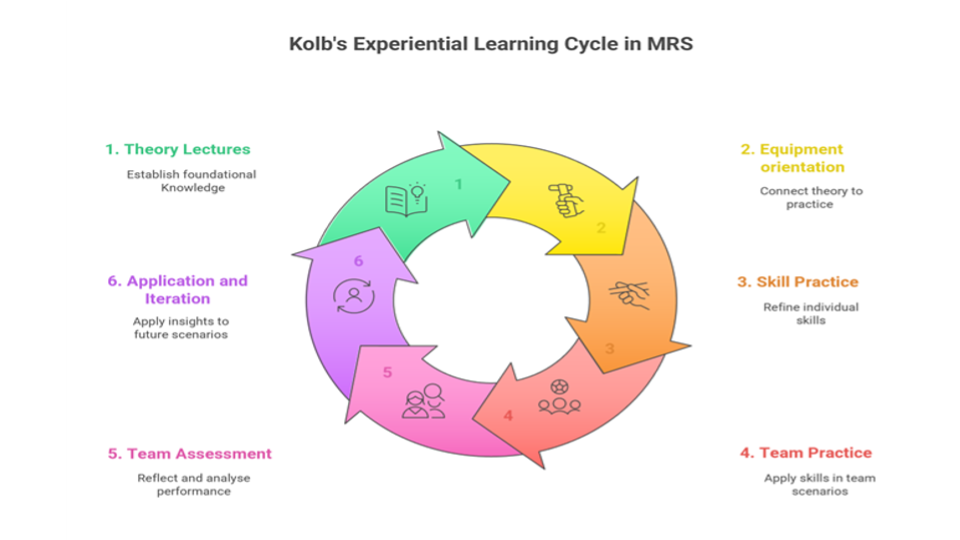
    Central to effective MRS is the principle of experiential learning, best exemplified by David Kolb's ELC [3]. This model posits that learning is a cyclical process involving four distinct stages: Concrete Experience (CE), Reflective Observation (RO), Abstract Conceptualisation (AC), and Active Experimentation (AE). This cycle provides a comprehensive framework for designing MRS sequences, that move beyond rote memorisation to foster deep understanding, critical reflection, and adaptive expertise [4].

    The integration of Kolb's ELC into a structured MRS curriculum is illustrated below (Figure 2).

    ●     AC - Theory Lectures: The learning journey commences with the introduction of foundational knowledge. During theory lectures, students are exposed to the core concepts, principles, operational protocols, and theoretical underpinnings essential for medical rescue operations. This stage is vital as it establishes the cognitive architecture upon which practical skills and experiential understanding will be built. Without this initial framework, subsequent hands-on activities may lack the necessary context and depth, hindering the development of true comprehension. This aligns with the broader imperative for evidence-based practice in medical rescue, where actions are informed by established knowledge [5].

    ●     CE & AC - Equipment Orientation: This phase serves as a crucial bridge between theoretical knowledge and its tangible application. Students engage in an initial Concrete Experience by physically handling and familiarising themselves with medical rescue equipment. Simultaneously, this interaction reinforces Abstract Conceptualisation, by allowing students to connect the theoretical functions and principles of the equipment (learned in lectures) to its actual features, operation, and limitations. This transitional stage is significant because it embodies the understanding that knowledge must not only be intellectually grasped but also practically engaged with to become meaningful [6].

    ●     CE & RO - Isolated Skills Practice and Sign-off: This stage places a strong emphasis on Concrete Experience through the active practice of specific, discrete medical rescue skills. Students repeatedly perform these skills in a controlled setting. The "sign-off" component, which involves assessment and feedback from instructors, directly facilitates Reflective Observation. Students are prompted to reflect on their performance of each skill, identify areas requiring improvement, and consider the effectiveness of their techniques. This reflection can lead to a refined understanding (AC) of how to execute the skill proficiently. This stage underscores the value of deliberate practice and the indispensable role of structured reflection and feedback in skill acquisition and refinement, linking directly to professional accountability and standards of competence [6].

    ●     CE - Team MRS Practice: Following the mastery of isolated skills, students progress to a more complex and richer experience. Here, they must apply their theoretical knowledge, equipment handling abilities, and individual procedural skills, within a dynamic, interactive, and often immersive team environment. These MRS are designed to mirror the complexities and pressures of real-world medical rescue scenarios. This stage represents the core of experiential learning for professions that rely heavily on teamwork. It shifts the focus from individual skill execution to integrated team performance, fostering an understanding of team dynamics, communication, and coordinated action elements, crucial for successful medical rescue outcomes [7].

    The immersive nature of these MRS promotes situated cognition, where learning is deeply embedded in the context of practice [8].

    ●     RO & AC - Team Assessment: This critical stage is heavily weighted towards Reflective Observation and the subsequent development of new Abstract Conceptualisations. Through comprehensive debriefing sessions, performance reviews, and multi-source feedback (including self-assessment, peer feedback, and instructor evaluations), students and teams meticulously analyse what occurred during the MRS. They explore the rationale behind actions taken, the consequences of those actions, and how their collective performance aligned with established principles, protocols, and objectives. This structured reflection is not merely a feedback mechanism; it is a profound learning process that facilitates the deconstruction of the experience, an understanding of cause-and-effect relationships, and the re-conceptualisation of their mental models and approaches [9]. This leads to new insights, modified strategies, and a deeper, more nuanced understanding (AC) of medical rescue operations.

    ●     AE - Application and Iteration: The cycle culminates in Active Experimentation. Based on the rich RO and refined AC generated during the team assessment and debriefing, students plan how to apply their revised understandings and newly acquired insights in future contexts. This could involve subsequent, more challenging MRS, further targeted practice, or, ultimately, application in real-world medical rescue situations, which becomes a new Concrete Experience, restarting the cycle, ideally at a progressively higher level of competence. This stage emphasises that learning is not a terminal event but a continuous, recurring process of action, reflection, and adaptation. This iterative nature is fundamental for professions like medical rescue that demand lifelong learning, continuous quality improvement, and the constant pursuit of enhanced performance [10].

    The consistent application of Kolb's ELC in MRS naturally fosters a pedagogical shift from a predominantly didactic, teacher-centred approach, to a more facilitative, student-centred philosophy. The emphasis on students actively engaging in experiences (CE) and critically reflecting on those experiences (RO) empowers them to construct their own understanding and meaning.

    Scaffolding the Complex Medical Rescue Procedures Through MRS

    The development of proficient and adaptable TRS necessitates pedagogical approaches, that can effectively bridge the gap between theoretical knowledge and the complex, often chaotic, realities of emergency situations [11]. SBE has emerged as a cornerstone in this endeavour, providing a safe yet realistic environment for students to practice and refine critical skills. Within SBE, the principle of scaffolding offers a robust framework for structuring learning experiences, enabling the incremental acquisition of complex medical rescue competencies [15].

    The Principle of Scaffolding in SBE

    Scaffolding, in an educational context, refers to a process whereby students are provided with temporary, tailored support to achieve learning outcomes that would otherwise be beyond their unassisted reach. This support is gradually withdrawn as the student's proficiency and independence increase [15]. The concept, most famously associated with Vygotsky's (1978) notion of the Zone of Proximal Development (ZPD), posits that learning is most effective when it occurs in the space between what a student can do independently and what they can achieve with guidance [12, 13].

    In SBE for complex medical rescue procedures, scaffolding is not merely about simplifying tasks, but about structuring the learning environment to make complex cognitive and psychomotor processes accessible. Medical rescue operations are characterised by high stakes, significant time pressures, dynamic environments, and the need for sophisticated team coordination. These elements can generate considerable cognitive load, potentially overwhelming novice students, and hindering the development of robust skills [14].

    A scaffolded approach systematically manages this load, allowing students to focus on specific aspects of performance at different stages of their development [15]. Effective scaffolding aims to reveal the underlying causal mechanisms that constitute competent performance [16]. By providing structured support, instructors can help students identify, understand, and internalise these mechanisms, such as critical decision-making heuristics, effective communication strategies, or precise motor skills, rather than merely mimicking superficial actions [17]. The "emergence" of expert performance is thus cultivated through a carefully modulated process that respects the student's current capacities while strategically expanding them [18].

    Breaking Down Procedures: Practising Isolated Skills

    Many complex medical rescue procedures are, in reality, a concatenation of several discrete skills and decision points. Attempting to teach or practice such multifaceted procedures, holistically from the outset, can be counterproductive.

    The principle of "part-task training," a core element of scaffolding, involves deconstructing a complex skill into its constituent components, allowing students to practice and achieve mastery of these isolated elements before integrating them into a more fluid and comprehensive performance [6].

    Figure 3. offers a broad perspective of a high-angle rescue scenario, highlighting the diverse competencies, that rescue students are expected to develop. These constructs, when merged, will showcase, although simplistic and generalised, the activities that will take place during such a medical rescue operation.

    Fidelity Progression

    Low-fidelity Environment: These may involve basic rope work, like knot making or tabletop exercises. The focus is on fundamental concepts, decision-making processes, and basic procedural steps, without the distraction of highly realistic but potentially overwhelming environmental cues. For example, practising communication protocols or anchor point identification, knot making, etc. To address the multifaceted demands of modern medical rescue incidents, we developed the Visually Enhanced Mental Rescue Simulation (VEMRS) as demonstrated in Figure 4. This low-cost, highly interactive modality is an adaptation of the Visual Enhanced Mental Simulation (VEMS) methodology created for training in resource-constrained environments [19]. VEMRS deliberately shifts the focus from singular patient care to the wider operational landscape, challenging students with issues of incident command, inter-agency communication, and strategic decision-making under pressure [20]. Adopting VEMRS functions as more than a training tool; it is a research platform for identifying the deep-seated causal mechanisms, like team dynamics and communication habits, that are pivotal in determining medical rescue outcomes [21].

    Medium-fidelity Environment: These might incorporate controlled outdoor training sites capable of exhibiting physiological responses, more realistic equipment, and some environmental distractors. Students begin to integrate skills in a more contextualised manner.

    High-fidelity Environment: These are designed to closely mirror the complex and unpredictable nature of real-world situations. By incorporating authentic locations, such as mountainous terrain, these environments introduce genuine uncertainty and time pressures, requiring participants to quickly adapt. The involvement of live actor patients further increases the realism, compelling participants to integrate all necessary skills while under significant stress.

    The pursuit of authenticity, however, increases the risk of physical injury. The dynamic and uncontrolled elements present in such environments, require strong safety measures. To mitigate these risks, it is essential to conduct comprehensive risk assessments, hold mandatory safety briefings, ensure the presence of dedicated safety officers with clear authority to intervene, and establish emergency protocols. These measures are vital to guarantee that the valuable and immersive learning experience does not compromise students' well-being, balancing realism with strict safety oversight.

    Complexity Progression

    Complexity can be increased by manipulating variables such as:

    Number of Tasks: Starting with single-focus scenarios, and moving towards multi-tasking requirements.

    Information Load: Initially providing clear and unambiguous information, then introducing incomplete or conflicting data.

    Environmental Stressors: Adding background noise, weather, or challenging physical spaces.

    Team Dynamics: Progressing from individual tasks to scenarios requiring intricate interprofessional collaboration and communication.

    Patient Condition: Starting with stable patients or single pathologies and advancing to deteriorating patients with multiple co-morbidities.

     This progressive approach ensures that students are continually challenged but not excessively overwhelmed. Each stage builds upon the last, allowing for the consolidation of learning and the gradual development of resilience and adaptability. From a critical realist standpoint, the increasing complexity and fidelity seen in Figure 5. allow for the interaction of more numerous and varied causal mechanisms, providing students with insight into how these mechanisms interplay in real-world settings to produce outcomes [22]. The "geo-history" of the student, their prior experiences and learning trajectories, also informs their engagement with these progressively complex scenarios, highlighting the individualised nature of skill emergence [23].

    Principles of Scaffolding in High-Angle Medical Rescue Training

    In SBE, the concepts of fidelity and complexity progression are closely intertwined. For example, when applying scaffolding principles in high-angle rescue training, students progress from scenarios with low complexity and high levels of support to those with greater complexity and reduced support. Throughout this progression, the level of instruction, hands-on practice, and feedback is gradually adjusted to match the student’s development and needs [24].

    Basic Knot Tying and Equipment Familiarisation

    Low Complexity, High Support:

    ●       Instruction: Direct, step-by-step demonstration of each knot (e.g., figure-eight, double fisherman's) and explanation of each equipment piece (e.g., carabiners, belay devices, ascenders).

    ●       Practice: Repetitive, isolated practice of individual knots on a rope segment or familiarisation with equipment function in a low-pressure setting.

    ●       Feedback: Immediate, prescriptive correction and verification of accuracy by the instructor.

    Set Up of a Single Person Ascend and Descend Line

    Medium Complexity, Medium Support:

    ●       Instruction: Guided demonstration of how to integrate known knots and equipment (harness, descender/ascender, belay device, anchor) for personal ascent/descent.

    ●       Practice: Supervised students practice on a low, stable structure (e.g., a training tower or short wall) with redundant safety systems in place.

    ●       Feedback: Real-time coaching on body mechanics, safety checks, and procedural flow; interventions for significant errors.

    Set Up of a Basic Mechanical Advantage System

    Medium Complexity, Medium Support:

    ●       Instruction: Explanation of principles of mechanical advantage (e.g., 3:1, 5:1 systems) and demonstration of combining rope, pulleys/carabiners, and anchors to build a simple system.

    ●       Practice: Team-based exercises to assemble and operate the system with a non-critical load (e.g., a rescue dummy) on flat ground or a gentle slope.

    ●       Feedback: Focus on correct rigging, load management, and team communication; troubleshooting common issues as they arise.

    Apply Medical Rescue Techniques to Different and Novel Environments

    High Complexity, Low Support:

    ●       Instruction: Scenario-based briefings with minimal direct instruction on specific techniques; emphasis on problem-solving and adaptation.

    ●       Practice: Full-scale exercises in varied, less predictable environments (e.g., multi-story structures, natural rock faces, confined spaces) with complex scenarios and potential stressors (e.g., noise, limited visibility).

    ●       Feedback: Instructor primarily observes, intervenes only for critical safety concerns, and facilitates comprehensive debriefings focused on decision-making, risk assessment, team coordination, and adaptive problem-solving under pressure. Students are encouraged to self-assess and provide peer feedback.

    This allows students to develop the specific motor skills and cognitive understanding required for each step without the immediate pressure of managing the entire scenario. Once proficiency in these isolated skills is demonstrated, they can be progressively chained together. This methodical approach ensures that foundational competencies are robustly established, which is critical for the successful "emergence" of the more complex, integrated skill. The "absence" of a specific foundational skill can lead to cascading failures in a real-world medical rescue operation; isolated practice helps identify and remediate such potential absences early in the MRS process. This aligns with a critical realist emphasis on understanding how component parts (mechanisms) contribute to the functioning (or dysfunctioning) of the whole system [25].

    Progressive Scenario Design: From Low to High Fidelity and Complexity

    Effective scaffolding in SBE extends beyond individual skills to the overall design of MRS scenarios. Progressive scenario design involves a deliberate and incremental increase in both the fidelity and complexity of MRS as students advance [26].

    Techniques for Effective Scaffolding (Micro-level)

    Beyond the macro-level design of curricula and scenarios, effective scaffolding relies on specific techniques employed by instructors during the MRS and debriefing phases. These micro-level interactions provide crucial real-time support and guidance [27].

    Clear Pre-briefing: Before a scenario begins, instructors must clearly articulate the learning objectives, the expected level of performance, the available resources, and the degree of support that will be offered. This manages student expectations and focuses their attention [28].

     Thinking Aloud: Encouraging students to verbalise their thought processes during a scenario can provide instructors with insights into their decision-making and allow for timely, targeted guidance. It also helps students to self-monitor and reflect-in-action [29].

     Prompting and Cueing: When students encounter difficulties, instructors can provide subtle hints, questions, or direct cues to guide them towards appropriate actions or considerations. This might involve drawing attention to a critical piece of data or suggesting a potential intervention. The level of prompting should be inversely proportional to the student's developing expertise [30].

     Structured Feedback: Providing specific, objective, and constructive feedback, both during (if appropriate and aligned with the scaffolding strategy) and after the scenario, is essential. This feedback should focus on observed behaviours and their consequences, linking them to the underlying principles and mechanisms of effective care [31, 32].

     Pause and Discuss: In some instances, particularly during formative learning, it can be beneficial to temporarily pause the MRS to discuss a critical decision point, clarify a misunderstanding, or reinforce a teaching point before resuming the scenario [33].

     Gradual Withdrawal of Support (Fading): As students demonstrate increased competence and confidence, the instructor systematically reduces the level of prompting, cueing, and direct intervention. This encourages greater autonomy and allows students to take fuller ownership of the problem-solving process [30].

     Effective Debriefing: The post-scenario debriefing is a cornerstone of SBE and a critical component of scaffolding. Instructors should guide a reflective discussion that encourages students to explore not only what happened, but why it happened and how it could be improved. This involves examining the causal chains of events, the decisions made (and their rationales), and the impact of team interactions [34]. An informed debriefing might explicitly probe the interplay of contextual factors, individual actions, and underlying mechanisms that shaped the scenario's outcomes [35]. These micro-level techniques, when skilfully applied, create a dynamic and responsive learning environment that supports students in navigating complex challenges and internalising the deep structures of proficient medical rescue practice [27].

     Scaffolding complex medical rescue procedures through SBE is a powerful pedagogical strategy that aligns with the demands of preparing TRS for high-stakes environments. By systematically breaking down procedures, progressively designing scenarios from low to high fidelity and complexity, and employing effective micro-level support techniques, instructors can create pathways for students to develop the robust, adaptable competencies required in medical rescue. This approach not only fosters the emergence of proficient performance but also cultivates a deeper understanding of the causal mechanisms that underpin successful outcomes in medical rescue situations. Such a structured, yet adaptable, pedagogical framework is indispensable for programmes aiming to produce critically thinking and highly capable TRS.

    Conclusion

    The systematic scaffolding of complex medical rescue procedures, through deliberate progression in simulation fidelity and task complexity, alongside the decomposition of procedures into discrete, manageable skills, effectively mitigates cognitive and psychomotor overload. This structured approach facilitates the incremental development of proficiency, enabling learners to build upon foundational competencies in a manner that supports the emergence of expert performance.

    While the broader framework of MRS encompasses four interconnected pillars, this article has primarily focused on the pedagogical dimensions of foundational learning theory, and systematic skill scaffolding as critical drivers of effective SBE. The remaining pillars, which are integrated physical preparedness and stringent safety protocols, although acknowledged as essential to the holistic development of TRS, were not the central focus of this article. Their roles in ensuring physical readiness and safeguarding psychological and physical well-being warrant dedicated exploration in future work.

    By emphasising the theoretical and instructional foundations of simulation, this article contributes to the advancement of evidence-informed practices in medical rescue training. Institutions committed to producing competent, resilient, and critically thinking TRS must adopt such structured and theory-driven approaches to SBE, ensuring that learners are equipped not only with technical expertise, but also with the cognitive agility required to navigate the complexities of real-world emergencies.

    Author contributions
    All authors contributed equally and validated the final version of record.
    Declarations
    Conflicts Of Interests
    The Authors declare that there is no conflict of interest.
    Funding
    This research received no specific grant from any funding agency in the public, commercial, or not-for-profit sectors.
    Registration
    No registration applicable.
    Data availability statement
    The data that support the findings of this study are available from the corresponding author upon reasonable request.
    Ethical approval
    Ethical approval for this study was not required.

    References

    1.      Hooshangi N, Mahdizadeh Gharakhanlou N, Ghaffari-Razin SR. Urban search and rescue (USAR) simulation in earthquake environments using queuing theory: estimating the appropriate number of rescue teams. Int J Disaster Resil Built Environ. 2024;15(1):1‒18. https://doi.org/10.1108/IJDRBE-09-2021-0122

    2.      Elendu C, Amaechi DC, Okatta AU, Amaechi EC, Elendu TC, Ezeh CP, et al. The impact of simulation-based training in medical education: a review. Medicine (Baltimore). 2024;103(27):e38813. https://doi.org/10.1097/MD.0000000000038813

    3.      Secheresse T, Pansu P, Lima L. The impact of full-scale simulation training based on Kolb’s learning cycle on medical prehospital emergency teams: a multilevel assessment study. Simul Healthc. 2020;15(5):335‒340. https://doi.org/10.1097/SIH.0000000000000461

    4.      Wijnen-Meijer M, Brandhuber T, Schneider A, Berberat PO. Implementing Kolb’s experiential learning cycle by linking real experience, case-based discussion and simulation. J Med Educ Curric Dev. 2022;9:23821205221091510. https://doi.org/10.1177/23821205221091511

    5.      Smith M. Experiential learning experiences of emergency medical care students at a selected University in KwaZulu-Natal [Dissertation for the Degree of Master of Health Sciences]. [Durban, South Africa]: Durban University of Technology; 2018. https://doi.org/10.51415/10321/3093

    6.      Taraporewalla K. The Adaptation of Motor Learning Theory in Medical Procedural Tasks [PhD Thesis]. Faculty of Medicine, The University of Queensland; 2024. https://doi.org/10.14264/ea20136

    7.      Zawawi AA, Halim NA, Kamarunzaman NZ, Zawawi AA, Halim FW. The linkage between team communication, team motivation and search and rescue team performance. SA J Hum Resour Manag. 2023;21:10. https://doi.org/10.4102/sajhrm.v21i0.2217

    8.      Chernikova O, Heitzmann N, Stadler M, Holzberger D, Seidel T, Fischer F. Simulation-based learning in higher education: a meta-analysis. Rev Educ Res. 2020;90(4):499‒541. https://doi.org/10.3102/0034654320933544

    9.      Chan CKY, Lee KKW. Reflection literacy: a multilevel perspective on the challenges of using reflections in higher education through a comprehensive literature review. Educ Res Rev. 2021;32:100376. https://doi.org/10.1016/j.edurev.2020.100376

    10.  Abdullah N, Rose J, Brown E, Geduld H. Vehicle extrication in road traffic crashes: a descriptive analysis of an advanced medical rescue service in South Africa. Afr J Emerg Med. 2025;15(2):621‒7. https://doi.org/10.1016/j.afjem.2025.04.003

    11.  Altmiller G, Pepe LH. Influence of technology in supporting quality and safety in nursing education. Nurs Clin North Am. 2022;57(4):551‒62. https://doi.org/10.1016/j.cnur.2022.06.005

    12.  Shabani K, Khatib M, Ebadi S. Vygotsky’s zone of proximal development: instructional implications and teachers’ professional development. English Lang Teach. 2010;3(4):237. https://doi.org/10.5539/elt.v3n4p237

    13.  Sellberg C, Mona L, Saljo R. Assessment in the zone of proximal development: simulator-based competence tests and the dynamic evaluation of knowledge-in-action. Classroom Discourse. 2022;13(4):365‒85. https://doi.org/10.1080/19463014.2021.1981957

    14.  Esmaeili R, Yazdi M, Rismanchian M, Shakerian M. Unveiling the dynamics of team cognition in emergency response teams. Front Psychol. 2025;16:1534224. https://doi.org/10.3389/fpsyg.2025.1534224

    15.  Masava B, Nyoni CN, Botma Y. Scaffolding in health sciences education programmes: an integrative review. Med Sci Educ. 2023;33(1):255‒73.  https://doi.org/10.1007/s40670-022-01691-x

    16.  Stutchbury K. Critical realism: an explanatory framework for smallscale qualitative studies or an ‘unhelpful edifice’? Int J Res Method Educ. 2022;45(2):113‒28. https://doi.org/10.1080/1743727X.2021.1966623

    17.  Thornhill-Miller B, Camarda A, Mercier M, Burkhardt J-M, Morisseau T, Bourgeois-Bougrine S, et al. Creativity, critical thinking, communication, and collaboration: assessment, certification, and promotion of 21st century skills for the future of work and education. J Intell. 2023;11(3):54. https://doi.org/10.3390/jintelligence11030054

    18.  Sobuwa S. A critical realist study into the emergence and absence of academic success among Bachelor of Emergency Medical Care students [Doctoral Thesis]. University of Cape Town; 2018. Available from: http://hdl.handle.net/11427/29475

    19.  Alinier G, Meyer J, Naidoo V, Campbell C. Simplifying simulated practice for healthcare professionals and educators. J Emerg Med Trauma Acute Care. 2016;2016(2):1. https://doi.org/10.5339/jemtac.2016.icepq.79

    20.  Dogan B, Pattison N, Alinier G. A form of mental simulation with significant enhancements enabling teamwork training. Int J Healthc Simul. 2021;1(1):56‒60. https://doi.org/10.54531/JSHC9951.

    21.  Brazil V, Speirs C, Scott C, Schweitzer J, Purdy E. Recommendations for the design and delivery of visually enhanced mental simulation: insights from participants and facilitators. J Healthc Simul. 2025;1‒11. https://doi.org/10.54531/NDXV6633

    22.  Swart R, Duys R, Hauser ND. SASS: South African Simulation Survey ‒ a review of simulation-based education. S Afr J Anaesth Analg. 2019;25(4):12‒20.

    23.  Khalid AF, George MA, Eggen C, Sritharan A, Wali F, Viens AM. Using Simulation-Based Experiential Learning to Increase Students’ Ability to Analyze Increasingly Complex Global Health Challenges: A Mixed Methods Study. medRxiv. 2023 Jan 1;2023.12.19.23300262. https://doi.org/10.1101/2023.12.19.23300262

    24.  Bauer E, Heitzmann N, Fischer F. Simulation-based learning in higher education and professional training: approximations of practice through representational scaffolding. Stud Educ Eval. 2022;75:101213. https://doi.org/10.1016/J.STUEDUC.2022.101213

    25.  Owen JR, Kemp D, van der Watt P, Harris J, Li Ern Ang M, Marais L. Disaster scenes as a foundation for emergency response planning. Int J Disaster Risk Reduct. 2024;113:104795. https://doi.org/10.1016/j.ijdrr.2024.104795

    26.  Fraser KL, Ayres P, Sweller J. Cognitive load theory for the design of medical simulations. Simul Healthc. 2015;10(5):295. https://doi.org/10.1097/SIH.0000000000000097

    27.  Masava B, Nyoni CN, Botma Y. Standards for scaffolding in health sciences programmes: a Delphi consensus study. J Med Educ Curric Dev. 2023;10:23821205231184045. https://doi.org/10.1177/23821205231184045

    28.  Hughes PG, Hughes KE. Briefing prior to simulation activity. In: StatPearls [Internet]. Treasure Island (FL): StatPearls Publishing; 2025. Available from: https://www.ncbi.nlm.nih.gov/pubmed/31424818

    29.  Abdulmohdi N, McVicar A. Investigating the clinical decision-making of nursing students using high-fidelity simulation, observation and think aloud: a mixed methods research study. J Adv Nurs. 2023;79(2):811‒24. https://doi.org/10.1111/JAN.15507

    30.  Poledna M, Gomez-Morales A, Hagler D. Nursing students’ cue recognition in educational simulation: a scoping review. Nurse Educ. 2022;47(5):283‒7. https://doi.org/10.1097/NNE.0000000000001198

    31.  Ludeke AK, Olaya JFG. Effective feedback, an essential component of all stages in medical education. Universitas Medica. 2020;61(3):1‒15. https://doi.org/10.11144/Javeriana.umed61-3.feed

    32.  Ajjawi R, Bearman M, Molloy E, Noble C. The role of feedback in supporting trainees who underperform in clinical environments. Front Med (Lausanne). 2023;10:1121602. https://doi.org/10.3389/fmed.2023.1121602

    33.  Lee JY, Szulewski A, Young JQ, Donkers J, Jarodzka H, van Merrienboer JJG. The medical pause: importance, processes and training. Med Educ. 2021;55(10):1152‒60. https://doi.org/10.1111/medu.14529

    34.  Decker S, Alinier G, Crawford SB, Gordon RM, Jenkins D, Wilson C. Healthcare Simulation Standards of Best Practice™: the debriefing process. Clin Simul Nurs. 2021;58:27‒32. https://doi.org/10.1016/j.ecns.2021.08.011

    35.  Abulebda K, Auerbach M, Limaiem F. Debriefing techniques utilized in Medical Simulation. In: StatPearls [Internet]. Treasure Island (FL): StatPearls Publishing; 2025. Available from: https://www.ncbi.nlm.nih.gov/pubmed/31536266


  • Knowledge and Stigma Regarding HIV and Homosexuality: An Exploratory Survey of Responding Physicians in Lebanon

    Background
         HIV remains a major public health challenge in the Middle East and North Africa (MENA), where stigma against people with HIV (PWH) and men who have sex with men (MSM) hinders access to care. In Lebanon, little is known about physicians’ current knowledge, attitudes, and willingness to provide care for PWH.
    Methods
         We conducted an exploratory online survey of all Lebanese physicians registered with the Ministry of Public Health, distributed in four waves between 2023 and 2025. The 58-item questionnaire assessed HIV knowledge, attitudes toward PWH and homosexual colleagues, willingness to provide medical care, and practices related to sexual history and pre-exposure prophylaxis (PrEP). Out of 4,331 emails, 760 were invalid and 127 physicians responded (3.2%).

    Results
         Interpretation is limited by a low response rate, and findings should be  considered for hypothesis generation rather than prevalence estimates.  Respondents were mostly male (63%), with varied specialties and practice
    settings. Knowledge of HIV transmission was generally high, though gaps were identified: 54% did not recognize breastmilk as a transmission route, 20% were unaware of confidential testing facilities, and only 64% knew that PrEP prevents transmission. While 86% were willing to medically examine PWH and over 90% would perform minor or major procedures, 29% believed physicians have the right to refuse care due to fear of infection. Stigmatizing attitudes were also noted, where 13% would not buy food from PWH, 33% would not allow their child
    to play with PWH, and 39% would not accept surgery from a surgeon living with HIV. Regarding homosexuality, 10–12% opposed accepting homosexual applicants to medical training or granting them practicing privileges. Most respondents (61%) did not routinely take sexual histories, and 84% had never prescribed PrEP, while 96% agreed on the need for further education.

    Conclusion
         In this exploratory sample, respondents had adequate HIV knowledge, but signs of stigma and prevention gaps (PrEP/sexual history) were identified toward PWH and homosexual colleagues, coupled with significant gaps in awareness of PrEP and HIV testing. Physician-targeted educational campaigns focusing on transmission, PrEP, and non-discrimination may help reduce barriers to HIV care and align Lebanon with WHO’s goal of ending the epidemic.

    INTRODUCTION
         As of 2025, HIV remains one of the longest on-going pandemics [1]. Affecting diverse populations, different areas of the world deal with it differently [2]. Thus, the barriers to HIV care tend to be unique to certain areas of the world, dictated by the prevalence of certain modes of transmission, access to care, availability and cost of medication, ease of diagnosis, lack of awareness and stigma and social barriers [3]. As of 2019, the United Nations Programme on HIV/AIDS (UNAIDS) reported a 95% surge in HIV incidence in the Middle East and North Africa (MENA) region [4]. With a high proportion of new infections occurring in the population of men who have sex with men (MSM) [5], these populations face a lot of stigma and stereotype that challenges their access to HIV-related care. In addition, insurances are able to legally refuse and deny coverage for a person living with HIV (PWH) [6]. Moreover, not all Lebanese physicians are willing to assess PWH or people belonging to the Lesbian/Gay/Bisexual/Transsexual+ (LGBT+) community [7]. These people often face discrimination when seeking medical care, which can
    root from discrimination or lack of proper training due to excessive stigma [8].

         With the Lebanese Ministry of Public Health (MoPH), the National AIDS Control Program and the local NGOs, awareness was improved and medication was provided for free, in an attempt to improve sexual health, prevention and HIV care [9]. There was a decrease of 52% in HIV incidence in 2020 [10]. However, despite
    evidence of continued transmission during coronavirus lockdown years [11], little data exists about the progress related to stigma and awareness, especially with a big outflow of physicians and an economic crisis [12].

         Among the tools available to assess physicians’ perspective on this matter, surveys provide valuable data, but they are challenged by low response rates, leading to selection bias [13, 14]. Despite these challenges, nationwide surveys provide very meaningful exploratory information in such settings in the most cost-effective way [15].

         To assess the current situation, we conducted an exploratory survey sent to all registered Lebanese physicians to assess their attitudes towards HIV and homosexuality as well as their knowledge about HIV. This would provide a descriptive assessment of the current situation amongst Lebanese providers and their current willingness to engage, treat and assist in the care of PWH in  Lebanon. As we have little data regarding this area in Lebanon, recording such
    responses would provide valuable information about the nature of the situation and help identify areas to focus efforts for future intervention for a more effective approach towards the World Health Organization (WHO) goals to ending the HIV epidemic.

         Emergency and acute care settings are usually the first point of contact for people with undiagnosed HIV, patients presenting after occupational exposure or sexual assault, and those requiring urgent interventions. Physician knowledge of HIV transmission risk, comfort with procedural care, and familiarity with HIV  prevention strategies affect patient safety, occupational safety, and equity of care.

    METHODS
         Analyses were planned as primarily descriptive given the exploratory study design and anticipated low response rate.

         To assess the current attitudes of Lebanese physicians towards PWH and homosexual patients, we conducted an online survey that was sent to all
    registered Lebanese physicians via email, in 4 waves between 2023 and 2025.

         The survey consisted of 58 multiple-choice questions regarding HIV  transmission awareness, attitude towards PWH, experience and willingness to
    provide medical care to PWH, healthcare professionals living with HIV and colleagues who are homosexual and sexual history and pre-exposure prophylaxis (PrEP).

         The 58-item instrument was developed for exploratory use based on domains relevant to HIV care and stigma (transmission knowledge, willingness to provide care/procedures, occupational exposure/PEP/PrEP awareness, sexual history  practices, and attitudes toward colleagues). Items were reviewed by the study team for clarity and validity prior to distribution. The questionnaire was not  normally psychometrically validated.

         We used a registry of emails provided by the Lebanese AIDS Society which  contains emails of all registered Lebanese physicians in the MoPH as of 2019. This yielded 4331 email addresses. A special email address was used to send the IRB-approved email template containing the google docs link to the survey.

         Out of the email addressed contacted, 760 addressed were unreachable due to a wrong, inactive or outdated address. The remaining 3571 addresses received all 4 email invitations, which yielded 127 (3.2%) responses.

         Given the low response rate, results are subject to nonresponse and selection bias, and are presented as exploratory findings rather than population estimates.

    STATISTICAL ANALYSIS
         Responses were summarized using counts and percentages. Given the exploratory design and limited sample size, we restricted analyses to descriptive statistics and bivariate comparisons. Associations between physician characteristics and outcomes related to HIV stigma and prevention were explored by chi-square or Fisher’s exact tests, as appropriate. Univariable logistic regression was performed to estimate odds ratios (ORs) with 95% confidence intervals when possible. No multivariable modeling was planned. All analyses were considered hypothesis-generating, and p-values were interpreted descriptively without adjustment for multiple comparisons.

    ETHICS
         This project was reviewed and granted approval by the Lebanese American University Institutional Review Board. All survey answers were kept anonymous.

    RESULTS
         Out of the 127 responses, 81 (63%) were male, 12 (9.4%) graduated before 1989, 19 (15%) between 1990 and 1999, 44 (35%) between 2000 and 2009 and 52 (41%) after 2010. Among respondents, 81 (64%) graduated from Lebanese private universities, 25 (19.6%) graduated from the Lebanese University and 20 (15.7%) graduated from outside Lebanon. They practiced in different specialties, with family medicine, pediatrics, anesthesiology, obstetrics and gynecology and infectious diseases being the most reported specialties reported. Regarding studies, 94 (74%) of respondents reported to have studied abroad at some point in their careers, and 75 (59%) of them reported practicing medicine at some point outside Lebanon. As for practice, 77 (60.6%) reported practicing in a university medical center and 64 (50.3%) reported engaging in teaching activities at least 2 times weekly. 93 (73.2%) of them reported seeing on average more than 10 patients per day.

    Questions regarding HIV and transmission awareness
         The vast majority (125; 98.4%) of respondents knew HIV cannot be transmitted by sharing eating and drinking utensils or by sharing towels and toilets with PWH. Regarding other sexually transmitted infections (STIs) like gonorrhea and genital herpes, 88 (69.2%) of respondents knew they increase the likelihood of HIV transmission if untreated. For vertical transmission, 111 (87.4%) knew a mother with HIV can have an uninfected baby. However, 69 (54.3%) respondents did not know that HIV can be transmitted to the baby by breastmilk. As for routine antibody-based testing, 114 respondents (89.7%) were certain these tests are not able to detect HIV antibodies within a few days of infection, and 25 (19.7%) of respondents did not know there are facilities in Lebanon that provide confidential testing. Furthermore, 3 (2.3%) physicians responded that they can tell if someone is a PWH by their appearance. 108 (85%) responded that antiretroviral therapy (ART) prolongs the life of PWH, and 81 (64%) knew that oral PrEP is effective in HIV prevention.

    Questions regarding general attitude towards PWH
         When asked about interactions with PWH, 9 (7%) respondents did not agree to go to a store owned by a PWH, 17 (13.3%) did not agree to buy food from a PWH, 42 (33.1%) did not agree to let their child play with a PWH, 19 (15%) did not agree to play sports with someone with HIV, 16 (12.6%) were reluctant to accept a dinner invitation from a friend living with HIV and 2 (1.6%) thought that PWH should be isolated.

    Questions regarding experience and willingness to provide medical care to PWH
         When it came to experience with PWH, 89 (70.1%) of respondents have treated a PWH at some point in their careers, and 122 (86.1%) of them expressed willingness to medically examine a PWH. If that person is a relative, 117 (92.1%) were willing to medically care for them. When asked if they were willing to perform minor procedures on PWH, such as venipuncture, abscess drainage, mole excision, chest tube placement, 81 of the 87 (93.1%) eligible respondents expressed willingness to do so, and with open surgery, 56 of the 60 (93.33%) eligible respondents were willing to do so. A third of respondents (37, 29.1%) agreed that physicians have the right to refuse medical care to PWH for fear of contamination.

    Questions regarding healthcare professionals living with HIV and colleagues who are homosexual
         Among the physicians who responded to the survey, 12 (9.4%) reported they would not accept to be treated by a doctor who lives with HIV, and 50 (39.4%) reported not accepting to be operated on by a surgeon living with HIV. While 124 (97.6%) expressed willingness to get tested for HIV if exposed, 22 (17.3%) have never been tested before.

         Regarding colleagues with HIV, 15 respondents (11.8%) were unwilling to refer patients to a colleague with HIV, 9 (7.%) think a colleague who gets infected with HIV should not be allowed to continue working and 15 (11.8%) think a qualified applicant with HIV should not be admitted to medical school or residency programs.
         Regarding homosexuality, 15 (11.8%) would not refer a patient to a colleague who is homosexual, 13 (10.2%) think such a colleague should be denied practicing privileges and 12 (9.4%) think a qualified applicant who is homosexual should not be admitted to medical school or residency programs.

    Questions regarding sexual history and PrEP
         Most respondents (78, 61.4%) did not take sexual history in their routine history taking, and 107 (84.2%) had never prescribed PreP. Furthermore, 61 (48%) expressed unwillingness to prescribe it for someone with high risk of HIV infection, and 62 (49%) believed it will decrease safe sex practices and increase the incidence of STIs. Similarly, 23 (18.1%) would not advise an exposed colleague to start PrEP, and 44 (34.6%) believed PreP will cause ART resistance. The majority of respondents (122, 96.1%) believed more education around PrEP should be implemented before prescribing it routinely.

    Exploratory Association Analyses
         We performed exploratory bivariate analyses to assess if certain physician characteristics were associated with stigma and prevention outcomes. No statistically significant associations were observed for routine sexual history taking, PrEP prescribing, belief in the right to refuse care, or willingness to accept surgery from a surgeon/dentist living with HIV (all p>0.05). Univariable logistic regression similarly did not identify significant predictors; however, there was a trend toward lower refusal of surgery among physicians who had studied abroad (OR 0.51, 95% CI 0.23–1.14; p=0.10).

    DISCUSSION
         While we had different demographic profiles of respondents, most younger graduates, who work in educational institutions and had some international experience with a big patient load. This coincides with the known profile of physicians who are more likely to respond to survey invitations, are they are more familiar with such an approach [16]. Furthermore, such profiles are generally more accepting and less stigmatizing of patient populations, due to general and educational trends, making them more inclined to answer surveys related to stigma around HIV and homosexuality [17, 18].

         In general, our exploratory survey showed a high awareness of the general knowledge about HIV transmission and the safety of sharing utensils and toilets with PWH, which is a good baseline. This situation is better than the 1990s, where PWH were discriminated against because of misinformation around this topic. Back then even nurses would not enter the rooms of PWH and they would be left alone, stigmatized, and quarantined [19].

         However, our results show significant gaps in knowledge around HIV transmission and its interaction with other STIs. Only 69% of respondents knew that untreated gonorrhea and herpes increase HIV transmission risk, and around 46% not being sure or not knowing that HIV can be transmitted via breastmilk might be indicators of an awareness gap, worthy of a focused intervention in future campaigns.

         Furthermore, around 10% of respondents were not certain about antibody testing windows and 20% were not aware of confidential testing facilities. These can be barriers to effective testing, where some PWH might not know their status. In addition, while 85% of provider respondents knew that ART prolongs life or PWH, only 65% of them knew PrEP is effective in prevention, which can be an awareness gap to target for future campaigns.

         While a small number, still having some providers think they can tell PWH by appearance and that they should be quarantined, is a significant indicator that stigma and misinformation are not fully eradicated, even among physicians. This is especially evident in a quantifiable stigma attitude towards PWH, which ranges from somewhere around 7% with minimal interaction (buying groceries from shopper) to around 33% when a respondent’s child is playing with a PWH. The 1996-2004 Lebanese study showed a gap between HIV awareness and declining knowledge in prevention and safe practices. When this stigma is not eradicated, even among physicians, this can impede public health interventions. This shows there is a multi-layered problem where misinformation not only affects the general public, but also some healthcare providers [20].

         However, when it comes to providing care, the general trend was positive, with more than 85% of respondents willing to examine PWH or caring for relatives with HIV and performing minor procedures or surgeries on them. This can represent an improvement from the 50-50 willingness of physician care for PWH in 2014(7). Nevertheless, 29% of them agreeing that physicians have the right to refuse care for PWH because of fear of contamination might be a point to target in future campaigns to stress on non-transmissibility of the virus in treated PWH with controlled viral loads [21]. This hesitation is concerning in emergency departments, where delays in triage or refusal of urgent procedures due to fear of transmission can impact patient morbidity [22]. Therefore, more education about basic infection control barriers and their effectiveness in prevention of any blood-borne illness prevention should always be implemented, especially that most patients are not routinely tested for HIV. If all barriers fail and a needlestick injury happens, post-exposure prophylaxis, or PEP, is available and effective [23].

         This remains better than the situation in the 1990s, where physicians and dentists in the west would deny PWH care due to fear of the infection and of stigma, despite effective treatment emergence [24].

         Furthermore, the percentages of respondents who discriminate against medical (9.4%) or surgical (39.4%) colleagues with HIV was alarming. Their unwillingness to refer patients to colleagues who live with HIV (11.8%), and similar percentages of respondents thinking colleagues with HIV or who are homosexual should be denied practicing privileges or prevented from admission to medical school or residency programs shows some clear discriminatory points in the medical community against PWH and LGBT+ people.

         Regarding sexual history taking and PrEP, having 61% of respondents admitting to not routinely taking sexual history shows possible missed opportunity for detecting new exposure and preventing new infection. However, 84% of respondents have never prescribed PrEP and 48% are not willing to do so with one-third of them lack up-to-date knowledge about its use or safety.

         Surveys responses can be low, sometimes less than 5%, especially in uncompensated surveys as in our case. 13 Physician surveys are especially known to have low response rates [25]. Furthermore, the coronavirus pandemic induced a “survey fatigue”, further decreasing response rates [26]. Some invitations would have been lost in the high volume of emails received daily by physicians. Furthermore, since there is no perceived benefit from filling the surveys, many would have just ignored the invitation [13, 27, 28]. The financial crisis and general stress and burnout would be demotivating to fill a survey, and the outflow of physicians to outside the country means that many of them might have abandoned the previously registered email accounts. Moreover, it is impossible for us to know with certainty the number of active email addresses in the registry, so our calculated 3.2% response rate might be an underestimation of the actual rate of response from physicians who received the invitation and filled the survey. Therefore, percentages in this study should be interpreted as signals among respondents, not as estimates of stigma prevalence among Lebanese physicians overall.

         This low response rate would lead to a selection and a nonresponse bias, which affects data representativeness and accuracy. However, the exploratory nature of this study in a topic that is stigmatized and faced with the obstacles mentioned makes our findings important. While our study was not made to draw generalizable conclusions, it aims to gain insight into the current situation among physicians, providing us with potential areas of focus for future interventions in the country to mitigate challenges PWH face while seeking healthcare.

         These results would help us make some recommendations for prevention efforts against HIV in Lebanon in the coming years based on the possible gaps identified in our exploratory survey. These recommendations would be for awareness campaigns targeted for physicians practicing medicine in Lebanon. Based on these findings, we recommend that future educational campaigns for Lebanese physicians prioritize three areas. First, interventions must correct persistent misconceptions regarding horizontal transmission and teach the concept that Undetectable = Untransmissible (U=U) to reduce refusal of care. Second, training should focus on practical protocols regarding indications for PrEP, the window periods for different HIV tests, and the availability of confidential testing sites. Finally, to ensure occupational safety and reduce delays in procedures, education should include efficacy of PEP following needle-stick injuries, ensuring that fear of contamination does not compromise urgent surgical or emergency interventions.

    LIMITATIONS
         Our study has some limitations, especially its low response rate. This is mitigated by the exploratory nature of the study. The questionnaire was not pilot-tested or psychometrically validated, which may affect reliability and comparability across studies. In addition, the list of emails used was from 2019, which was largely due to the unavailability of a more updated list after the COVID-19 pandemic. As a lot of physicians left Lebanon after the pandemic, this can be a contributing factor to the low response rate.

    CONCLUSION
         With stigma and misinformation affecting the public and healthcare professionals regarding HIV and homosexuality in Lebanon, it is important to identify areas of actionable concern. This exploratory survey revealed knowledge gaps, especially in PrEP use, HIV testing and transmission. In general, physician-targeted campaigns on HIV awareness regarding transmission, screening, testing, availability of confidential testing sites, PrEP and PEP might play a role in promoting acceptance, especially in the emergency department. These targeted campaigns, identified by our survey, might be very promising in changing Lebanese physicians’ attitudes towards HIV in Lebanon, and subsequently their attitude towards homosexuality. This would lead to more testing, more treatment and more viral control, contributing eventually to the WHO goals to end HIV.

    Author contributions
    All authors contributed equally and validated the final version of record.
    Declarations
    Conflicts Of Interests
    The Author declares that there is no conflict of interest.
    Funding
    This research received no specific grant from any funding agency in the public, commercial, or not-for-profit sectors.
    Registration
    No registration applicable.
    Data availability statement
    The data that support the findings of this study are available from the corresponding author upon reasonable request.
    Ethical approval
    This project was reviewed and granted approval by the Lebanese American University Institutional Review Board. All survey answers were kept anonymous.

    References

    1.           A Timeline of HIV and AIDS. HIV.gov. Accessed May 12, 2025. https://www.hiv.gov/hiv-basics/overview/history/hiv-and-aids-timeline

    2.           Global Statistics. HIV.gov. Accessed May 12, 2025. https://www.hiv.gov/hiv-basics/overview/data-and-trends/global-statistics

    3.           Sambayi GL, Bwire GM, Kilapilo MS, Myemba D, Mosha IH, Kilonzi M, et al. Barriers and Enablers to Retention in HIV Care and Adherence to Antiretroviral Therapy: Evidence from Dar es Salaam, Tanzania. HIV AIDS (Auckl). 2024 Jul 26;16:301–311. https://doi.org/10.2147/HIV.S458545

    4.           Assi A, Abu Zaki S, Ghosn J, Kinge N, Naous J, Ghanem A, et al. Prevalence of HIV and other sexually transmitted infections and their association with sexual practices and substance use among 2238 MSM in Lebanon. Sci Rep. 2019 Oct 22;9(1):15142. https://doi.org/10.1038/s41598-019-51688-7


    5.           Country progress report - Lebanon [Internet]. Global AIDS Monitoring 2020;  Accessed May 12, 2025. https://www.unaids.org/sites/default/files/country/documents/LBN_2020_countryreport.pdf

    6.           Berk E. Viral Subjects: Stigma, Civil Society Activism, and the Making of HIV/AIDS in Lebanon [Internet] [PhD dissertation]. Yale Graduate School of Arts and Sciences; 2021. Available from: https://elischolar.library.yale.edu/gsas_dissertations/303


    7.           Abdessamad HM, Fattal O. Lebanese Medical Association for Sexual Health: Advancing Lesbian, Gay, Bisexual, and Transgender Health in Lebanon. LGBT Health. 2014;1(2):79–81. https://doi.org/10.1089/lgbt.2013.0039

    8.           Daoud Khatoun W, Slim A, Makhlouf J, Lau SSS, Cheng MCH, Chebat A, et al. Health conditions, health literacy, access to care, and health care experiences among lesbian, gay, bisexual, transgender and queer adults in Lebanon. International Journal for Equity in Health. 2025 Apr 7;24(1):95. https://doi.org/10.1186/s12939-025-02417-2


    9.           National AIDS Control Program. National HIV Strategic Plan 2023-2028 [Internet]. Ministry of Public Health of Lebanese Republic; 2025. Available from: https://www.moph.gov.lb/userfiles/files/Prevention/NationalAIDSControlProgram/National%20HIV%20Strategic%20Plan%202023-2028_Final.pdf


    10.        WHO - Regional Office for the Eastern Mediterranean. World Health Organization. [cited 2025 May 12]. Lebanon HIV/AIDS country profile 2020. Available from: http://www.emro.who.int/asd/country-activities/lebanon.html

    11.        STI & HIV 2023 World Congress [Internet]. American Sexually Transmitted Diseases Association; [cited 2025 May 12]. Available from: https://stihiv2023.org/


    12.        Bou Sanayeh E, El Chamieh C. The fragile healthcare system in Lebanon: sounding the alarm about its possible collapse. Health Econ Rev. 2023;13(1):21. https://doi.org/10.1186/s13561-023-00435-w


    13.        Ellis LA, Pomare C, Churruca K, Carrigan A, Meulenbroeks I, Saba M, et al. Predictors of response rates of safety culture questionnaires in healthcare: a systematic review and analysis. BMJ Open. 2022 Sep 1;12(9):e065320. https://doi.org/10.1136/bmjopen-2022-065320


    14.        American Medical Association [Internet]. 2018 [cited 2025 May 13]. 3 legitimate concerns about patient-experience surveys. Available from: https://www.ama-assn.org/delivering-care/ethics/3-legitimate-concerns-about-patient-experience-surveys


    15.        American Medical Association [Internet]. 2017 [cited 2025 May 13]. How physician surveys impact major issues. Available from: https://www.ama-assn.org/delivering-care/public-health/how-physician-surveys-impact-major-issues

    16.        Larson N, Neumark-Sztainer D, Harwood EM, Eisenberg ME, Wall MM, Hannan PJ. Do young adults participate in surveys that ‘go green’? Response rates to a web and mailed survey of weight-related health behaviors. Int J Child Health Hum Dev. 2011;4(2):225-231.

    17.        GLAAD [Internet]. New York; 2023 [cited 2025 May 14]. GLAAD releases fourth annual HIV stigma study. Available from: https://glaad.org/releases/glaad-releases-fourth-annual-hiv-stigma-study/


    18.        Ghanem CA, El Khoury C, Mutchler MG, Ghosh-Dastidar B, Kegeles S, Balan E, et al. Gay Community Integration as Both a Source of Risk and Resilience for HIV Prevention in Beirut. Int J Behav Med. 2020 Apr 1;27(2):160–9. https://doi.org/10.1007/s12529-019-09829-9


    19.        Abdelnour R. A silent history: The AIDS epidemic in Lebanon. L’Orient Today [Internet]. 2023 Apr 26 [cited 2025 May 14]; Available from: https://today.lorientlejour.com/article/1335673/a-silent-history-the-aids-epidemic-in-lebanon.html


    20.        Kahhaleh, JG, El Nakib, M, Jurjus, AR. Knowledge, attitudes, beliefs and practices in Lebanon concerning HIV/AIDS, 1996–2004. East Mediterr Health J [Internet]. 2009 [cited 2025 May 14];15(4). Available from: https://www.emro.who.int/emhj-volume-15-2009/volume-15-issue-4/knowledge-attitudes-beliefs-and-practices-in-lebanon-concerning-hivaids-19962004.html


    21.        HIV Undetectable=Untransmittable (U=U), or Treatment as Prevention | NIAID: National Institute of Allergy and Infectious Diseases. May 21, 2019. Accessed May 14, 2025. https://www.niaid.nih.gov/diseases-conditions/treatment-prevention

    22.        Shin SJ, Vail RM, Shah SS, et al. Perioperative Care in Adults With HIV. Johns Hopkins University; 2024. Accessed December 22, 2025. http://www.ncbi.nlm.nih.gov/books/NBK576018/

    23.        Post-Exposure Prophylaxis (PEP) | NIH. Accessed May 14, 2025. https://hivinfo.nih.gov/understanding-hiv/fact-sheets/post-exposure-prophylaxis-pep

    24.        Lambert B. AIDS WAR SHUNNED BY MANY DOCTORS. The New York Times. https://www.nytimes.com/1990/04/23/nyregion/aids-war-shunned-by-many-doctors.html. April 23, 1990. Accessed May 14, 2025.

    25.        Cunningham CT, Quan H, Hemmelgarn B, Noseworthy T, Beck CA, Dixon E, et al. Exploring physician specialist response rates to web-based surveys. BMC Med Res Methodol. 2015 Apr 9;15(1):32. https://doi.org/10.1186/s12874-015-0016-z


    26.        de Koning R, Egiz A, Kotecha J, Ciuculete AC, Ooi SZY, Bankole NDA, et al. Survey Fatigue During the COVID-19 Pandemic: An Analysis of Neurosurgery Survey Response Rates. Front Surg. 2021;8:690680. https://doi.org/10.3389/fsurg.2021.690680


    27.        Peabody JW, Taguiwalo MM, Robalino DA, Frenk J. Improving the quality of care in developing countries. In: Jamison DT, Breman JG, Measham AR, Alleyne G, Claeson M, Evans DB, et al., editors. Disease Control Priorities in Developing Countries [Internet]. New York: Oxford University Press; 2006. Available from: https://www.ncbi.nlm.nih.gov/pubmed/21250362


    28.        Booker QS, Austin JD, Balasubramanian BA. Survey strategies to increase participant response rates in primary care research studies. Family Practice. 2021;38(5):699–702. https://doi.org/10.1093/fampra/cmab070


  • The Burden of Road Traffic Injuries: A Global Perspective

    Introduction
         Road Traffic Injury (RTI) pose a significant health challenge. It represents the eighth leading cause of death globally, prompting the UN to designate 2011-2020 as the “Decade of Action for Road Safety”. This study aims to determine the global and regional burden of RTIs, and the impact of drink-driving and seatbelt-wearing on RTIs in 2017, while also assessing the UN Action Plan outcomes and forecasting the RTI rate for 2029.

    Methods
         Data on the global and regional RTI rates (2000-2019), regional seatbelt use (2017), and regional drink-driving (2017) were compiled from the Global Health Observatory Estimates. The investigated key metrics are global and regional RTI rate per 100,000 population in 2000-2019, percentage of regional seatbelt-wearing, drink-driving RTIs, and enforced seatbelt and drink-driving laws in 2017.

    Results
         This study reveals a heterogenous regional distribution of road traffic injuries in 2017. Africa sustained the highest RTI rate (27.6/100,000 population), while Europe reported the lowest rate (10.98/100,000 population). Regional variation in seatbelt laws exists, with the highest legalization in Europe (100%), and the lowest in Western Pacific (80.95%). Eastern Mediterranean (87.43%) and South-East Asia (46.8%) reported the highest and lowest driver seatbelt-wearing rates, respectively. All countries, except the Maldives, legislated drink-driving laws. Western Pacific (29.98%) and Eastern Mediterranean (1.65%) suffer from the highest and lowest burden of drink-driving RTI, respectively.

    Conclusion
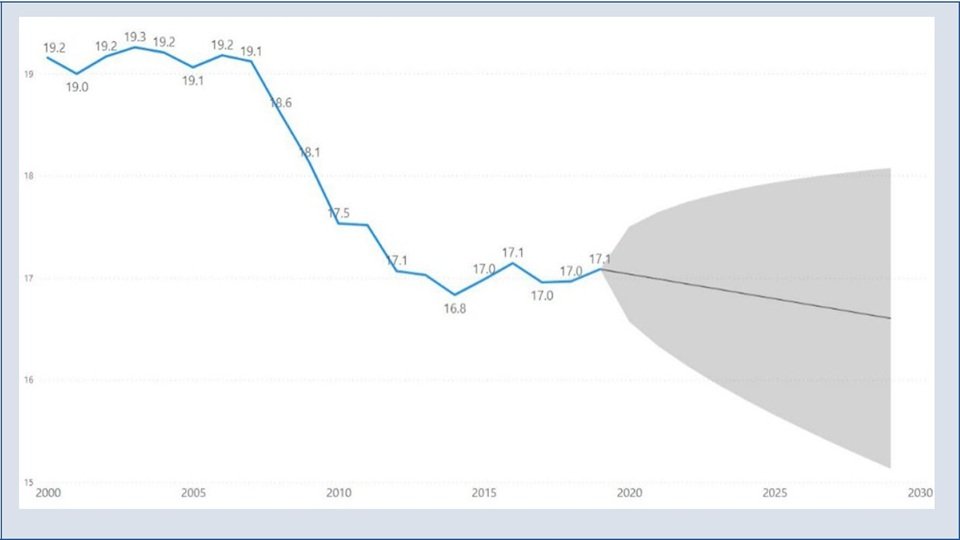
         Despite a relatively stable global RTI rate from 2011-2020 and a steady decline till 2029, the future trajectory
    remains uncertain in developing countries bearing the highest burden, due to slow national law enforcement,
    rendering the UN Action Plan insufficient in curbing the burden of RTIs.

    INTRODUCTION
         Road traffic injury (RTI) is a major global health challenge, impacting millions of individuals worldwide [1]. With approximately 20-50 million non-fatal injuries, 70 million disability-adjusted life years (DALYs), and 1.3 million deaths annually, RTI remains a neglected yet major health problem globally [1, 2]. According to the World Health Organization (WHO), RTI is ranked the 6th and 8th leading cause of DALYs and mortality globally, respectively [1, 3, 4]. The current steady RTI trends suggest that traffic fatalities are expected to become the 7th leading cause of death worldwide by 2030 [4].

         RTI imposes a real threat to the health and well-being of all populations across all age groups, with a particularly heightened burden on the youth population [5]. In fact, RTI constitutes the primary cause of death for people aged 5 to 29 years; the majority of victims were among the male populations compared to their female counterparts [1, 2, 6]. Existing literature identifies multiple factors that contribute to the increased rate in RTI mortality and morbidity among the youth and the males’ population, including the tendency to violate traffic laws such as traffic signals, and the lack of seatbelts/helmets use, in addition to the potential engagement in high-risk driving behavior, including car racing and drink-driving [7-10]. Females are relatively safer drivers at all times (day/night), and in all road conditions (i.e. weather, road layout, etc.), which decreases their risk of sustaining road fatalities, with nearly 3 times less likelihood of females being killed in road traffic crashes [1, 11, 12].

         Besides the health impact, RTIs inflict a serious economic and societal toll on individuals, families, and communities, incurring large direct and indirect costing reaching up to 3% of most countries’ gross domestic product (GDP) [1]. The human and economic loss associated with RTI is disproportionately more prominent in low- and middle-income countries (LMICs), where 93% of road traffic deaths (RTI) occur [1]. The latter is explained by several factors, including the high proportion of vulnerable road users, such as pedestrians and cyclists, the absence of road safety regulations, and the extensive illiteracy and defiance of laws in LMICs [8]. RTIs are expected to further rise in LMICs with the increasing motorization and urbanization [10].

         In addition to environmental factors, human behavior is responsible for the majority of road crashes [13, 14]. Human observation, interpretation, and planning errors further predispose individuals to traffic crashes and impact injury severity and outcome [14]. Various factors are associated with RTIs including speeding, fatigue, poor driving skills, alcohol and substance consumption, poor vehicle conditions, violation of traffic laws (i.e. improper seatbelt/helmet/child seat use, use of mobile phone while driving, disregarding traffic signs, etc.), unsafe road environments (i.e. bad weather, poor infrastructure, poor lighting, lack of pedestrian facilities, etc.), and inadequate post-crash care (i.e. first aid care, fast access to medical personnel, rehabilitation services, etc.), amongst others, contribute to increased traffic mortalities and morbidities [2, 13]. Enforcing the required measures of road safety and adopting safer road behavior substantially reduce road traffic crashes and subsequently prevents RTIs [1].

         Alcohol use, even in insignificant amounts, impairs the cognition, vision, and reaction time of all consumers [4, 10, 15]. Accordingly, blood alcohol concentration (BAC) above zero has been identified as a primary risk factor in the causation and severity of traffic crashes for all road users, including motorists and pedestrians [15]. Notably, drink-driving with a BAC greater than 0.04 g/dl results in severe behavior impairments associated with reckless driving, speeding, unfastening seatbelt/helmet, and disobeying traffic laws, and in turn dire traffic crashes and injuries [1, 15]. Alarmingly, approximately 20% of traffic fatalities in high-income countries and 33-69% of traffic deaths in LMICs are attributed to alcohol consumption, predominantly affecting young and novice drivers [10, 16]. Several countries including Canada, Australia, and Italy have adopted strategies to reduce RTI injuries and deaths among this high-risk group including the decrease of the BAC limit to ≤0.02 g/dl for young and/or novice drivers. This policy lead to a substantial reduction in traffic crashes by up to 24% [2, 4]. Other RTI reduction successful measures were implemented by over one hundred countries to reduce drink-driving include public awareness, random breath testing, and police sobriety checkpoints [4, 17]. Yet, given that LMICs are currently exposed to the growing use of alcohol, hardly any developing countries have enforced measures to control drink-driving [18]. Assessing the contribution of drink-driving on RTIs is crucial to develop prevention strategies, though data on drink-driving remains limited in the majority of LMICs and some high-income countries (HIC) [2, 4].

         While functional seatbelt laws and increasing compliance are enacted in more countries compared to drink-driving laws, many LMICs lack mandatory safety requirements with limited law enforcement and compliance [2, 4, 19, 20]. The WHO, the FIA Foundation, and partners, have highlighted the urgent need to increase seatbelt and child restraint use, particularly in LMICs experiencing rapid motorization. Seat-belts can reduce vehicle occupant deaths by up to 50%, while child restraints can prevent up to 71% of fatalities among infants. Despite high compliance in regions such as Europe, usage remains low in other regions. Updated WHO guidelines, as noted by Dr. Khayesi, emphasize comprehensive programs combining legislation, enforcement, and public education to promote seatbelt use and convince governments and citizens of such need [23, 24].

         Since the vast majority of RTIs are both predictable and preventable, global efforts have been concerted for decades to address the burden of traffic fatalities and injuries [2, 4]. Almost 123 countries, representing around six billion people, amended laws on at least one of the five key risk factors of road injuries, such as speeding, seatbelt and helmet use, child restraint use, and drink-driving [2]. HICs succeeded in reducing the toll of RTIs by relying on data-driven evidence and resources to inform strategic safety rules and regulations [2]. With the lack of adequate data on any traffic crash-related risk factor, such as alcohol consumption and seatbelt use, LMICs continued to mismanage RTIs and traffic deaths [2, 4]. Accordingly, the United Nations (UN) General Assembly launched the Decade of Action for Road Safety 2011–2020, with a target to save 5 million lives by the year 2020 [25]. This approach focused on five main pillars: road safety management, safer roads, safer vehicles, safer road user behavior, and post-crash care [25]. Evaluating the success of this plan is key to developing successful future strategies regarding traffic injuries and deaths worldwide.

         This study aims to describe the current burden of road injuries worldwide, for the period from 2000 to 2019, to highlight the impact of two major risk factors including alcohol consumption and seatbelt usage in 2017, and to forecast the future trends in road traffic deaths. It further assesses whether the period ranging between the years 2011 and 2020 was indeed the “Decade of Action for Road Safety” as proclaimed by the UN General Assembly. Findings from this study help to suggest reliable measurements that can be implemented globally and nationally to reduce and mitigate injuries and deaths on the roads.

    METHODS
    Data Sources
         Data were retrieved from the Global Health Observatory Estimates generated by the WHO for Information, Evidence, and Research. Data on six regions (Americas, Africa, Europe, Eastern Mediterranean, South-East Asia, and Western Pacific) were extracted and analyzed [26]. Data posted by WHO on seatbelt wearing rate and attribution of RTIs to alcohol were only available for the year 2017. Road traffic mortality rates and the estimated number of deaths worldwide are reported for the time falling between the years 2000 and 2019.

    Data Processing
         The collected data were processed using Power BI (Microsoft, Redmond, USA). Power BI is an interactive data visualization software product developed by Microsoft and focuses on business intelligence [27]. To build the dashboard, the following datasets were uploaded and used: estimated number of RTIs per gender, estimated RTI rate per gender (per 100,000 population), seatbelt use rate (%), the impact of RTIs on alcohol (%), and drink-driving existing national law (Binary yes/no), road safety strategy (Binary yes/no), and seatbelt law (Binary yes/no). All data attributes had a categorical parent location (i.e., region), location (i.e., country), and numerical period (i.e., year).
         Before data visualization using Power BI, data were compiled, uploaded, and preprocessed. A unique identifier (composite key) was created for the first four tables on the dashboard. The key encompasses the location and period (e.g. Afghanistan2000). The created identifiers were used to link the tables, and ultimately create the dynamic dashboard. For data visualization, parent location, location, and period, were then referred to as region, country, and year, respectively.
         The key metrics that were investigated in this study are as follows: RTIs rate (per 100 000 population) during the period 2000-2019, average regional RTI rate (per 100 000 population) and percentage in 2000-2019, percentage of driver seatbelt wearing rate (%) in 2017 per region, percentage of drink-driving RTIs (%) in 2017 per region, and the percentage of legalization of seatbelt use and drink-driving laws per region.
         As for the projection, it was generated using a linear regression model based on historical data of road traffic fatalities. The model assumes a consistent trend over time and extrapolates future values accordingly. This approach was chosen to provide a basic forecast of the potential trajectory if current patterns persist, recognizing that more complex models were beyond the scope of this study.

    RESULTS
         Of the six regions examined, Africa sustained the highest burden of RTIs with 27.6 RTIs per 100,000 population between 2000 and 2019, followed by the Eastern Mediterranean region (EMR) with 21.05 RTIs per 100,000 population. South-East Asia (16.95 RTI per 100,000) and the Americas (16.5 RTI per 100,000) suffered from a comparable rate of road traffic injuries, while Western Pacific and Europe sustained only 13.51 RTI per 100,000 and 10.98 RTI per 100,000 of RTIs during the same period, respectively (Table 1).
         Inversely, Europe reports 82.1% driver’s seatbelt compliance in 2017 (62.72% of European countries reporting this rate). With 53.33% of American countries reporting this measure, the driver’s seatbelt-use rate was 67.23% in 2017. Although the seatbelt-use rate of drivers in the EMR was high in 2017 (87.43%), only 4 out of 19 EMR countries (21.05%) disclose relevant statistics. Africa has the lowest reporting rate (18.18% of African countries reporting) and average driver seatbelt-use rate (47.78%) compared to other regions. With relatively moderate reporting, South-East Asia, and the Western Pacific regions (30 and 38.1% countries reporting, respectively) disclose a 46.8% and 77.66% seatbelt compliance rate in 2017, respectively (Table 2).

         Assessing the contribution of alcohol consumption to RTIs in 2017 across different regions revealed that Western Pacific (29.98% attribution with around 71.42% countries in the Western Pacific reporting their numbers) suffers from a relatively large burden of drink-driving RTIs compared to other regions, particularly EMR (1.65% attribution with 42.1% countries in EMR reporting their numbers). With an average reporting of 43.33% of the countries in the Americas, alcohol consumption was linked to 16.91% of their RTIs in 2017. Africa (14.35% attribution with only 25% of countries in Africa reporting their numbers), followed by South-East Asia (13.2% attribution with 30% of countries in South-East Asia reporting their numbers) and Europe (12.97% attribution with 76.47% countries in Europe reporting their numbers), suffered from relatively moderate drink-driving RTIs in 2017 (Table 2).

         In 2017, all European, African, American, EMR, South-East Asian, and Western-Pacific countries have existing national drink-driving laws, except the Maldives in South-East Asia (Figure 1).

         A clear discrepancy exists between regions when assessing the presence of national seatbelt laws across all countries in 2017. All European countries have established seatbelt safety laws. Americas (93.33%), followed by South-East Asia (90%), EMR (89.47%), and Africa (88.64%), further established seatbelt safety policies. Yet, only 80.95% of the Western Pacific region countries successfully adopted such laws to increase seatbelt wearing in 2017 (Figure 2).

         Although the overall RTI burden declined from 19.2 RTIs per 100,000 population in the year 2000 to 17.1 RTIs per 100,000 population in the year 2019, this rate insignificantly fluctuated (≈ 17.1 RTIs per 100,000 population) during the period between 2011 and 2020. Forecasting the overall global burden of RTIs from the year 2020 till the year 2029 revealed that the RTI rate is expected to steadily decrease (Figure 3).

    DISCUSSION
         This study explored the global distribution of RTIs across different regions. It further examined the impact of various risk factors on RTIs including driver seatbelt use and drink-driving. Evidence from this study will be key to assessing the degree of success of the “UN Decade of Action for Road Safety Plan” from 2011 to 2020, and further facilitates the prediction of the upcoming pattern of global rates of traffic injuries and fatalities.

         Consistent with previous studies, a substantial discrepancy in the burden of RTI existed between different regions [22, 28, 29]. Despite the global increase in traffic jams and the use of motor vehicles, Africa sustains a three-time higher risk of RTIs compared to Europe. This can be attributed to the strong link between traffic injuries and fatalities, and the country’s income level [28], as well as the diverse terrain in Africa which was associated with increased risk of RTIs [30-32].
         Interestingly, RTI depicted an increasing trajectory with increasing GDP in LMICs, and decreasing patterns with an increased GDP in HICs [28]. One study suggests that besides the growing mobilization in developing countries, the common hazardous driving, unsafe roads, and the high proportion of vulnerable road users, collectively increase the prevalence of local RTIs [8, 28]. Developed countries can mitigate this burden with the establishment of safer roads, efficient road safety policies, and enhanced emergency transport and medical treatment [28]. Accordingly, the classification of the majority of the African and EMR countries as low and lower-middle-income countries explains the high RTI rate, compared to upper-middle and high-income countries in Europe, the Americas, Western Pacific, and South-East Asia [33].
         The varying RTI toll across regions is found to be further associated with informing and enforcing regional and national road safety policies. While a portion of the burden lies on the government’s inefficient and limited resources to invest in road safety, human behavior predominantly contributes to RTIs [34]. Among the leading risk factors of RTIs are drink-driving and failing to use seatbelts among vehicle occupants and child restraint systems [35]. Findings from this study reveal that although all countries, except the Maldives, had established drink-driving laws in 2017, alcohol consumption still majorly contributes to RTIs globally. Aligned with existing studies, the Eastern Mediterranean Region sustains the lowest burden of drink-driving injuries and mortalities [36, 37]. In addition to the national laws, the strict cultural and Muslim religious practices in most EMR countries prohibit drinking and restrict alcohol consumption [36].

         On the contrary, drink-driving remains an increasingly major concern in other regions, particularly the Western Pacific, followed by the Americas and Africa. The elevated alcohol-attributable burden of RTI in the Western Pacific region is associated with the uppermost alcohol consumption rates in many countries like Tongo, Cooks Island, Australia, Papua New Guinea, and New Zealand [36, 37]. An existing study suggests that more than half of the RTIs in Papua New Guinea and Tongo, and one-third of the RTIs in Australia and New Zealand in 2017 are attributed to alcohol consumption above the legal limit [36]. A similar trend is seen in the Americas and Africa where alcohol use massively increased during the past decade, thus chiefly contributing to the toll of RTIs in countries like Canada, the USA, and South Africa [35, 36].

         According to the WHO, 45 countries including Brazil, Canada, New Zealand, and Australia, in addition to the majority of European countries like France, established drink-driving laws meeting the best practices (BAC ≤ 0.05 g/dl and BAC for young/novice drivers ≤ 0.02 g/dl) [2]. By monitoring the patterns of traffic injuries and fatalities via injury registries, such countries were capable of further legislating and amending country-specific policies [38]. Not only did Brazil restrict the BAC limit (0 g/l), it further mandated random breath testing, doubled the fines for drink-driving, and enhanced police power, to reduce the burden of RTIs [2, 39]. In France, driving under the influence of alcohol remains the second leading cause of traffic fatalities [40]. One French-based study showed that 90.7% of alcohol-positive subjects had an alarmingly high BAC (>0.08 g/dl) while driving [41]. Accordingly, without effective law enforcement and safer road user behavior, notably through compulsory random breath testing, efforts to address drink-driving remain inefficient [22, 28, 38].

         Evidence from this study reveals that legislation and implementation of seatbelt use are critical to reducing the global burden of RTIs. A previous study assessing the impact of human behavior on seatbelt use found that seatbelt non-use is positively associated with severe traffic injuries and deaths [42]. Improper driver seatbelt use has been found to increase traffic fatalities by 45-50% [2]. The relatively low toll of RTIs in Europe can be associated with the full establishment of mandatory seatbelt-use laws, and with the high driver’s seatbelt-use rate. The latter reflects mature road user behavior, where the level of literacy and awareness, among other factors such as the law penalty and residing in urban areas, were found to be positively associated with seatbelt use [34, 43]. The interventions to increase the use of seatbelts in HICs, including enhanced police training and enforcement, public awareness, and health education, further improved seatbelt-use compliance [44]. Europe further adopted mandatory installation of seatbelt reminder systems, as studies showed that this method is highly effective in enforcing seatbelt use [45].

         Collectively, with the recent increasing motorization, high illiteracy, inadequate seatbelt-use laws, and the absence of intervention strategies in many LMICs, the toll of RTIs in developing regions, like Africa and South-East Asia, continues to rise [44, 46]. The assessment of intervention strategies in LMICs must account for country-specific factors, such as barriers, cost, and sustainability, making HICs’ intervention strategies untransferable [34]. In this regard, culture and religion are two significant factors to investigate. Existing studies report that the strong belief in fate and destiny in Africa, South-East Asia, and EMR has been linked to riskier driving and seatbelt non-use [47-52]. Other studies found that religiosity is positively associated with better self-protection practices such as seatbelt use and no alcohol consumption [53, 54]. Implementing national research-based customized awareness campaigns and policies must address such research gaps. However, the presence of limited data in LMICs represents another major barrier to the understanding and assessment of RTIs [2].

         Although our analysis covers data only up to 2019, the Global Status Report on Road Safety 2023 confirms that recent global trends continue to show growing disparities [55]. While the global target of halving road traffic deaths between 2011 and 2020 was not achieved worldwide, 10 countries, including Belarus, Brunei Darussalam, Denmark, Japan, Lithuania, Norway, the Russian Federation, Trinidad and Tobago, the United Arab Emirates and Venezuela, did achieve reductions of at least 50% in fatalities. A further 15 countries saw decreases of 40–49%, 20 countries had decreases of 30–39%, and 33 countries reduced deaths by 20–29%. The European Region experienced the largest overall decline, with a 36% decrease in road traffic deaths, and the Western Pacific Region reported a 16% reduction. These successes coincide with countries that have broadly implemented “safe system” approaches, combining comprehensive legislation, enforcement and infrastructure improvements. When adjusted for population growth, the global fatality rate also declined from nearly 18 per 100 000 people in 2010, to about 15 per 100 000 in 2021, a 16% reduction.

         By contrast, many LMICs, especially those in the African Region, have not seen comparable progress. During the same period, 66 countries reported increases in road traffic deaths, including 28 in Africa, where fatalities rose by 17% overall. The African Region continues to have the highest death rates globally, and more than 90% of all road traffic fatalities still occur in LMICs, with pedestrians, cyclists and motorcyclists making up more than half of the victims. These figures highlight a persistent imbalance: the policies and investments that have successfully reduced deaths in high-income settings have not been implemented, or have been far less effective, in resource-constrained contexts. Without targeted support, stronger enforcement, and scaled-up investment in road safety for LMICs, particularly in Africa, the global goal of halving road traffic deaths and injuries by 2030 is unlikely to be equitably achieved. According to the WHO, global progress was slow to allow the anticipated reduction in RTIs as on-ground implementation was limited, especially in LMICs. This heterogeneity can be attributed to the funding gap, poor civic engagement, and governmental support in many LMICs [56, 57]. Besides setting an action plan, political commitment and public support are key to the successful enforcement of good practices and intervention strategies [57]. The lack of global and national data regarding RTI and its relative risk factors, like seatbelt use and drink-driving, especially in LMICs, further misled the progress of the “UN Decade of Action for Road Safety (2011–2020)” [2].

         Investing in health policy research is important to reduce the burden of road traffic injuries. Relevant and representative data should be collected especially from countries where RTIs continue to increase, like Paraguay, Chad, and Pakistan [22]. The European Transport Safety Council has adopted evidence-based research to improve transport safety in Europe [22]. In the USA, the Insurance Institute for Highway Safety conducted extensive science-based multidisciplinary research to employ low-cost road safety programs to enhance traffic safety [22]. Building on these examples, increasing the routine use of proven child safety measures, such as booster seats, bicycle helmets, and graduated driver licensing, can save governments and payers substantial medical and productivity costs. However, these interventions remain underutilized due to barriers such as split savings across payers, long payback periods, and political or practical challenges [58].

         Based on the marginal global improvement of traffic safety during the past decade and the continuous international and national efforts to reduce RTIs, this study forecasted a steady decrease in the global rate of RTIs in the upcoming years until 2029. A comparable pattern was obtained in a previous study, where the rate of RTIs was estimated between the years 2017 and 2030. Specifically, the rate of RTI was forecasted to decline by 12%, from 16.3 RTIs per 100,000 population in 2017 to 14.3 per 100,000 population in 2030 [59]. An existing study further predicted a steady decrease in the global rate of pedestrian road-traffic injuries between 2020 and 2030, indirectly imposing a similar reduction pattern of RTIs [60]. Regardless, this estimation might not apply if drastic measures and technologies were implemented during this period, or if global and national efforts were halted.

         This study has some limitations and strengths. A key limitation is that data in many countries are underreported. The missing data from all regions, particularly from LMICs in Africa and EMR, further limited this study. This might underestimate the burden of traffic injuries in many countries, thus altering the design of efficient intervention strategies to reduce RTIs. Another limitation of this study is that it disregards the political and socio-economic discrepancies between countries in the same region. Thus, even if the regional RTI rate declined, some countries might report an increasing burden due to country-specific factors. Also, the collective association and effect of other risk factors have not been studied. This study did not assess the cost-effectiveness of the proposed interventions, which limits the ability to determine their practicality across different economic settings. The use of a linear regression model assumes a consistent trend, which may not capture sudden policy changes, technological advancements, or other external shocks that could influence road safety outcomes.

         On the other hand, this study's strengths reside in using advanced data visualization software to process, manage, analyze, and visualize the data. Power BI helped create data models and relationships between the imported datasets. Moreover, its predictive analytics feature provided estimates of RTIs in the coming years, thus encouraging proactive measures to be taken to help curb the RTI phenomenon. This study further provides a global as well as a regional view of the RTI phenomenon in terms of seatbelt-use wearing rate and alcohol consumption rate, two of the major risk factors of RTIs.

         This study’s overview of the current global and regional distribution of RTIs shows an alarming heterogonous burden. Findings from this study urge policymakers and stakeholders to adopt and enforce safer and more efficient road policies and intervention strategies, and citizens to practice safer and more responsible road traffic behavior.

    Recommendations
         Based on these findings, actionable strategies should be prioritized, especially in LMICs. First, establishing a standardized and sustainable national road injury surveillance system is crucial to overcome data gaps and accurately guide interventions. Second, governments should consider implementing low-cost, research-informed campaigns tailored to local culture and beliefs to address key risk factors. For example, partnerships with community leaders may help reinforce positive behaviors. In addition, we recommend investing in capacity-building for local law enforcement and emergency services to reduce the burden of RTIs globally.

    CONCLUSION
         The future of road safety is expected to show a steady decrease in RTI rates globally, but this trajectory will remain heterogeneous across regions and countries. With the lack of strong enforcement of evidence-based intervention strategies, the burden of road traffic injuries and fatalities will remain high in developing countries. Minor changes in road safety behavior, such as seatbelt use, will significantly accelerate the reduction of the RTI rate, particularly in LMICs. The high rates of drink-driving and low rates of seatbelt use globally should be addressed via collective global, governmental, and societal efforts.

         The socioeconomic discrepancies should be considered during legislation to secure large-scale adoption of safety measures and enforcement of road safety laws at a national level. The alarmingly high missing data reported in this study call for reliable national data registries to ensure the success of the current “UN Decade of Action for Road Safety (2020-2030)” via country-specific intervention strategies.

    Author contributions
    All authors contributed equally and validated the final version of record.
    Declarations
    Conflicts Of Interests
    The Authors declare that there is no conflict of interest.
    Funding
    This research received no specific grant from any funding agency in the public, commercial, or not-for-profit sectors.
    Registration
    No registration applicable.
    Data availability statement
    The data that support the findings of this study are available from the corresponding author upon reasonable request.
    Ethical approval
    Ethical approval for this study was not required.

    References

    1. Road traffic injuries. World Health Organization; 2022.

    2. Global status report on road safety 2018 [Internet]. Geneva: World Health Organization; 2018. Available from: https://www.who.int/publications-detail-redirect/9789241565684

    3. Chang FR, Huang HL, Schwebel DC, Chan AHS, Hu GQ. Global road traffic injury statistics: Challenges, mechanisms and solutions. Chin J Traumatol. 2020 Aug 1;23(4):216–8. https://doi.org/10.1016/j.cjtee.2020.06.001.

    4. Global status report on road safety 2015 [Internet]. World Health Organization; Available from: https://www.afro.who.int/publications/global-status-report-road-safety-2015.

    5. Suphanchaimat R, Sornsrivichai V, Limwattananon S, Thammawijaya P. Economic development and road traffic injuries and fatalities in Thailand: an application of spatial panel data analysis, 2012–2016. BMC Public Health. 2019 Nov 4;19(1):1449. https://doi.org/10.1186/s12889-019-7809-7.

    6. Lozano R, Naghavi M, Foreman K, Lim S, Shibuya K, Aboyans V, et al. Global and regional mortality from 235 causes of death for 20 age groups in 1990 and 2010: a systematic analysis for the Global Burden of Disease Study 2010. Lancet. 2012 Dec 15;380(9859):2095–128. https://doi.org/10.1016/S0140-6736(12)61728-0.

    7. Hassen A, Godesso A, Abebe L, Girma E. Risky driving behaviors for road traffic accident among drivers in Mekele city, Northern Ethiopia. BMC Res Notes. 2011 Dec 13;4(1):535. https://doi.org/10.1186/1756-0500-4-535.

    8. Lakhan R, Pal R, Baluja A, Moscote-Salazar L, Agrawal A. Important Aspects of Human Behavior in Road Traffic Accidents. Indian J Neurotrauma. 2020 Sep 2;17. https://doi.org/10.1055/s-0040-1713079.

    9. Romano EO, Peck RC, Voas RB. Traffic environment and demographic factors affecting impaired driving and crashes. J Safety Res. 2012 Feb 1;43(1):75–82. https://doi.org/10.1016/j.jsr.2011.12.001.

    10. Sundet M, Kajombo C, Mulima G, Bogstrand ST, Varela C, Young S, et al. Prevalence of alcohol use among road traffic crash victims presenting to a Malawian Central Hospital: A cross-sectional study. Traffic Inj Prev. 2020 Oct 9;21(8):527–32. https://doi.org/10.1080/15389588.2020.1819990.

    11. Morgan A, Mannering FL. The effects of road-surface conditions, age, and gender on driver-injury severities. Accid Anal Prev. 2011 Sep 1;43(5):1852–63. https://doi.org/10.1016/j.aap.2011.04.024.

    12. Russo F, Biancardo SA, Dell’acqua G. Road Safety from the Perspective of Driver Gender and Age as Related to the Injury Crash Frequency and Road Scenario. Traffic Inj Prev. 2014 Jan 1;15(1):25–33. https://doi.org/10.1080/15389588.2013.794943.

    13. Mock CN, Nugent R, Kobusingye O, Smith KR, editors. Disease Control Priorities [Internet]. 3rd ed. Vol. 7. Injury Prevention and Environmental Health. 2017. Available from: http://hdl.handle.net/10986/28576.

    14. Thomas P, Morris A, Talbot R, Fagerlind H. Identifying the causes of road crashes in Europe. Ann Adv Automot Med. 2013 Sep 1;57:13–22.

    15. Mitis F, Sethi D. Reducing injuries and death from alcohol-related road crashes. In: Alcohol in the European Union Consumption, harm and policy approaches. Copenhagen: WHO Regional Office for Europe; 2012. p. 49–54.

    16. Lemoine P, Ohayon MM. [Abuse of psychotropic drugs during driving]. L’Encephale. 1996;22(1):1–6.

    17. Willis C, Lybrand S, Bellamy N. Alcohol ignition interlock programmes for reducing drink driving recidivism. Cochrane Database Syst Rev. 2004;(3). https://doi.org/10.1002/14651858.CD004168.pub2.

    18. Christophersen AS, Mørland J, Stewart K, Gjerde H. International Trends in Alcohol and Drug Use Among Motor Vehicle Drivers. Forensic Sci Rev. 2016;28(1):37–66.

    19. Hyder AA. Measurement is not enough for global road safety: implementation is key. Lancet Public Health. 2019 Jan 1;4(1):e12–3. https://doi.org/10.1016/S2468-2667(18)30262-7.

    20. Peden M, Scurfield R, Sleet D, Mohan D, Adnan A. Hyder, Jarawan E, et al., editors. World report on road traffic injury prevention. Geneva: World Health Organization; 2004.

    21. Bener A, Al Humoud SMQ, Price P, Azhar A, Khalid MK, Rysavy M, et al. The effect of seatbelt legislation on hospital admissions with road traffic injuries in an oil-rich, fast-developing country. Int J Inj Contr Saf Promot. 2007 Jun 1;14(2):103–7. https://doi.org/10.1080/17457300701212033.

    22. James SL, Lucchesi LR, Bisignano C, Castle CD, Dingels ZV, Fox JT, et al. Morbidity and mortality from road injuries: results from the Global Burden of Disease Study 2017. Inj Prev. 2020 Oct 1;26(Suppl 2):i46–56. https://doi.org/10.1136/injuryprev-2019-043302.

    23. Taylor M. New global guidelines to boost the use of life-saving safety restraints in vehicles [Internet]. World Health Organization; 2023. Available from: https://www.who.int/news/item/06-03-2023-new-global-guidelines-to-boost-the-use-of-life-saving-safety-restraints-in-vehicles23.

    24. Road traffic injuries [Internet]. World Health Organization; 2023. Available from: https://www.who.int/news-room/fact-sheets/detail/road-traffic-injuries

    25. Decade of Action for Road Safety 2011-2020 - Global Launch [Internet]. World Health Organization; 2011. Available from: https://www.who.int/publications/m/item/decade-of-action-for-road-safety-2011-2020---global-launch.

    26. The Global Health Observatory. Road safety [Internet]. World Health Organization; Available from: https://www.who.int/data/gho/data/themes/road-safety.

    27. Microsoft. What is Power BI? [Internet]. Microsoft; Available from: https://www.microsoft.com/en-au/power-platform/products/power-bi/.

    28. Bishai D, Quresh A, James P, Ghaffar A. National road casualties and economic development. Health Econ. 2006 Jan 1;15(1):65–81. https://doi.org/10.1002/hec.1020.

    29. Naci H, Chisholm D, Baker TD. Distribution of road traffic deaths by road user group: a global comparison. Inj Prev. 2009 Feb 1;15(1):55–59. https://doi.org/10.1136/ip.2008.018721.

    30. Africa’s Geography and Climate. In: World History 1: to 1500 [Internet]. LibreTexts Humanities; 2025. (World History). Available from: https://human.libretexts.org/Bookshelves/History/World_History/World_History_1%3A_to_1500_(OpenStax)/Unit_2%3A_States_and_Empires_1000_BCE500_CE/09%3A_Africa_in_Ancient_Times/9.02%3A_Africas_Geography_and_Climate.

    31. Ogungbire A, Kalambay P, Pulugurtha SS. Exploring the effect of mountainous terrain on weather-related crashes. IATSS research. 2024;48(2):136–146. https://doi.org/10.1016/j.iatssr.2024.03.001.

    32. Jima D, Sipos T. Interactive effects of elevation difference, slope variation, and terrain formation on road traffic crashes occurrences using triangular irregular network. Eng Rep. 2024;6(12):e12971. https://doi.org/10.1002/eng2.12971.

    33. The World by Income and Region [Internet]. World Bank; 2022. Available from: https://datatopics.worldbank.org/world-development-indicators/the-world-by-income-and-region.html.

    34. Forjuoh SN. Traffic-related injury prevention interventions for lowincome countries. Int J Inj Contr Saf Promot. 2003;10(1-2):109–118. https://doi.org/10.1076/icsp.10.1.109.14115.

    35. Papalimperi AH, Athanaselis SA, Mina AD, Papoutsis II, Spiliopoulou CA and Papadodima SA. Incidence of fatalities of road traffic accidents associated with alcohol consumption and the use of psychoactive drugs: A 7-year survey (2011-2017). Exp Ther Med. 2019;18:2299–2306. https://doi.org/10.3892/etm.2019.7787.

    36. Ritchie H, Roser M. Alcohol consumption [Internet]. Our world in data; 2018. Available from: https://ourworldindata.org/alcohol-consumption.

    37. Shield K, Manthey J, Rylett M, Probst C, Wettlaufer A, Parry CDH, et al. National, regional, and global burdens of disease from 2000 to 2016 attributable to alcohol use: a comparative risk assessment study. The Lancet Public Health. 2020 Jan 1;5(1):e51–61. https://doi.org/10.1016/S2468-2667(19)30231-2.

    38. Albalate D. Lowering blood alcohol content levels to save lives: The European experience. J Policy Anal Manage. 2008 Dec 1;27(1):20–39. https://doi.org/10.1002/pam.20305.

    39. Moura E, Carvalho Malta D, Neto O, Penna G, Temporão J. Motor vehicle driving after binge drinking, Brazil, 2006 to 2009. Rev Saude Publica. 2009 Sep 1;43:891–4. https://doi.org/10.1590/S0034-89102009005000062.

    40. Accidentalité routière 2018 – estimations au 28 janvier 2019 [Internet]. Observatoire national Interministériel de la sécurité routière; 2018. Available from: https://www.unionroutiere.fr/wp-content/uploads/2019/01/2019-01-28-ONISR-Accidentalit%C3%A9-routi%C3%A8re-estimations.pdf.

    41. Le Daré B, Degremont A, Couty C, Baert A, Morel I, Gicquel T. Alcohol and drug consumption among motor vehicle drivers in the Brittany region of France: A 9-year cross-sectional population study. Prev Med Rep. 2021 Jun 1;23:101454. https://doi.org/10.1016/j.pmedr.2021.101454.

    42. Beck LF, Kresnow MJ, Bergen G. Belief about seat belt use and seat belt wearing behavior among front and rear seat passengers in the United States. J Safety Res. 2019;68:81–88. https://doi.org/10.1016/j.jsr.2018.12.007.

    43. Vallibhakara S, Plitponkarnpim A, Suriyawongpaisal P, Thakkinstian A. Nationwide Surveillance of Seat Belt Usage and Encouraging Factors of Increasing the Seat Belt Rate in Thailand: A Road Safety Survey. J Med Assoc Thai. 2018 Jul 1;101:809–19.

    44. Stevenson M, Yu J, Hendrie D, Li L, Ivers R, Zhou Y, et al. Reducing the burden of road traffic injury: Translating high-income country interventions to middle-income and low-income countries. Inj Prev. 2008 Oct 1;14:284–9. https://doi.org/10.1136/ip.2008.018820.

    45. Lie A, Krafft M, Kullgren A, Tingvall C. Intelligent Seat Belt Reminders—Do They Change Driver Seat Belt Use in Europe? Traffic Inj Prev. 2008 Nov 1;9:446–9. https://doi.org/10.1080/15389580802149690.

    46. Ogundele J, Ifesanya A, Adeyanju S, Ogunlade S. The impact of seat-belts in limiting the severity of injuries in patients presenting to a university hospital in the developing world. Niger J Med. 2013 Mar 2;54:17–21. https://doi.org/10.4103/0300-1652.108888.

    47. Heydari S, Miranda-Moreno LF, Lord D, Fu L. Bayesian methodology to estimate and update safety performance functions under limited data conditions: A sensitivity analysis. Accid Anal Prev. 2014 Mar 1;64:41–51. https://doi.org/10.1016/j.aap.2013.11.001.

    48. Maghsoudi A, Boostani D, Rafeiee M. Investigation of the reasons for not using helmet among motorcyclists in Kerman, Iran. Int J Inj Contr Saf Promot. 2018;25(1):58–64. https://doi.org/10.1080/17457300.2017.1323931.

    49. Ngueutsa R, Kouabenan D. Fatalistic beliefs, risk perception and traffic safe behaviors. Eur. Rev. Soc. Psychol. 2017;67(6):307–316. https://doi.org/10.1016/j.erap.2017.10.001.

    50. Nordfjarn T, Jorgensen S, Rundmo T. Cultural and sociodemographic predictors of car accident involvement in Norway, Ghana, Tanzania and Uganda. Saf. Sci. 2012;50(9):1862–1872. https://doi.org/10.1016/j.ssci.2012.05.003.

    51. Omari K, Baron-Epel O. Low rates of child restraint system use in cars may be due to fatalistic beliefs and other factors. Transp. Res. F: Traffic Psychol. Behav. 2013;16:53–59. https://doi.org/10.1016/j.trf.2012.08.010.

    52. Peltzer K, Renner W. Superstition, risk-taking and risk perception of accidents among South African taxi drivers. Accid Anal Prev. 2003;35(4):619–623. https://doi.org/10.1016/s0001-4575(02)00035-0.

    53. Mcilroy R, Kokwaro G, Wu J, Jikyong U, Vu N, Hoque M, et al. How do fatalistic beliefs affect the attitudes and pedestrian behaviours of road users in different countries? A cross-cultural study. Accid Anal Prev. 2020 May 1;139:105491. https://doi.org/10.1016/j.aap.2020.105491.

    54. Yıldırım, Z. Religiousness, conservatism and their relationship with traffic behaviour [Internet] [M.S. - Master of Science]. Middle East Technical University; 2007. Available from: https://open.metu.edu.tr/handle/11511/17083.

    55. Global status report on road safety 2023 [Internet]. Geneva: World Health Organization; 2023. Available from: https://www.who.int/teams/social-determinants-of-health/safety-and-mobility/global-status-report-on-road-safety-2023.

    56. Hyder AA, Paichadze N, Toroyan T, Peden MM. Monitoring the Decade of Action for Global Road Safety 2011–2020: An update. Glob Public Health. 2017 Dec 2;12(12):1492–505. https://doi.org/10.1080/17441692.2016.1169306.

    57. Krug E. Decade of action for road safety 2011–2020. Injury. 2012;43(1):6–7. https://doi.org/10.1016/j.injury.2011.11.002.

    58. Miller T, Finkelstein A, Zaloshnja E, Hendrie D. The cost of child and adolescent injuries and the savings from prevention. Inj Prev. 2012 Aug 9;15–64. https://doi.org/10.2105/9780875530055ch02.

    59. Inada H, Li Q, Bachani A, Hyder A. Forecasting global road traffic injury mortality for 2030. Inj Prev. 2019 Aug 8;26:injuryprev–2019. https://doi.org/10.1136/injuryprev-2019-043336.

    60. Khan MAB, Grivna M, Nauman J, Soteriades ES, Cevik AA, Hashim MJ, et al. Global Incidence and Mortality Patterns of Pedestrian Road Traffic Injuries by Sociodemographic Index, with Forecasting: Findings from the Global Burden of Diseases, Injuries, and Risk Factors 2017 Study. Int J Environ Res Public Health. 2020;17(6):2135. https://doi.org/10.3390/ijerph17062135.

  • Assessment of Relatives’ Satisfaction in the Emergency Department

    Introduction: Emergency departments (EDs) are high-pressure environments where both patients and their relatives face numerous challenges. While patient satisfaction has been widely studied, the satisfaction of relatives remains underexplored, despite their crucial role in supporting patient care and decision-making. Recognizing relatives as key actors in the care process helps improve communication and reduce stress. This study aimed to assess the satisfaction of relatives of patients treated in the ED.

    Methods: A prospective, descriptive study was conducted at the ED of the Mahmoud Yaacoub Center for Urgent Medical Assistance in Tunis from October 2023 to January 2024. Satisfaction was assessed using a 25-item structured questionnaire. Included participants were adult relatives directly involved in patient care who gave informed consent. Assessed dimensions included reception and management, information provided and overall satisfaction.

    Results: The study included 165 relatives (mean age 41 ± 13 years, 52.1% female). Relationships included parents (26%), offspring (18.9%), and siblings (14.8%). Overall satisfaction was high: 78% were satisfied with the overall care, 82% with the initial reception, 74% with waiting times, 80% with accessibility, and 77% with information clarity. No significant associations were found between age or education and overall satisfaction. However, relatives from healthcare or paramedical backgrounds showed significantly higher satisfaction (85%) with the registration process compared to non-healthcare relatives (62%) (p = 0.043).

    Conclusion: The study supports strengthening the involvement of relatives in strategies aimed at improving ED care quality


    Introduction

         Emergency Departments (EDs) are high-pressure, overcrowded environments where skilled professionals provide care for critically ill patients [1,2]. The fast-paced, overcrowded, and unfamiliar ED environment can cause stress and frustration for patients and families, often leading to feelings of alienation and reduced involvement in care.

    Recognizing relatives’ as integral to the critical care process, and striving to support both patients and their loved ones has been proven to be a crucial aspect of comprehensive patient care [3–6]. Understanding and addressing the needs, emotions, and expectations of relatives of critically ill patients, along with gathering their feedback, helps ED professionals improve communication, enhance care quality, build trust, and reduce distress or aggressive behavior [7,8].

         Factors influencing family satisfaction in the ED include the clarity and frequency of communication with healthcare professionals, the perceived empathy and responsiveness of the care team, and logistical considerations, such as waiting times and access to information. Negative experiences in these areas can lead to significant dissatisfaction, potentially undermining trust in the healthcare system and discouraging future engagement with healthcare services. Conversely, positive interactions characterized by clear communication, empathy, and a supportive care environment can enhance the family’s understanding of the patient’s condition, foster greater cooperation with healthcare providers, and contribute to a more favorable overall experience.

         However, there is a notable gap in research focusing on ED, where the unique dynamics of acute care can significantly impact patient and relatives’ experience. Moreover, the satisfaction of relatives of patients in the ED has been even less frequently assessed, despite their crucial role in supporting patient care and decision-making. While patient satisfaction has been extensively studied, the satisfaction of patients' relatives, particularly within the high-pressure environment of the ED, remains under-explored [9]. In the ED, where patients frequently present with acute, often life-threatening conditions, the patient may be unable to actively participate in their care, placing greater importance on the involvement and perspectives of their relatives [10].

    This study aimed to assess the satisfaction of patients' relatives in a Tunisian ED and to identify the factors influencing their satisfaction.

    Methods

    Study design

         This study was a monocentric, prospective, observational, descriptive study conducted at the ED of Mahmoud Yaacoub Center for Urgent Medical Assistance in Tunis. The study was conducted over a four-month period, from October 2023 to January 2024.

         The study targeted adult relatives, aged 18 years or older, who were directly involved in the care of a patient during their visit to the ED. Eligible participants included parents, offspring, spouses, siblings, other family members, friends, or neighbors accompanying the patient. Relatives were not included if they were under 18, declined to participate, were accompanying incarcerated patients, or were related to patients who passed away during their ED stay. Surveys were excluded if they had a non-response rate exceeding 20%, defined as more than five unanswered items out of the 25-question survey. Additionally, responses related to patients who left the ED before completing their care were excluded from the final analysis. Informed consent was obtained from all participating relatives after explaining the study's purpose. Explicit verbal consent was also obtained from patients to allow accompanying relatives to receive medical information during the ED visit.

    Study Protocol

         A comprehensive family satisfaction survey was specifically developed for this study to assess the experience of relatives in the ED. The survey was  inspired from existing surveys in other departments and was designed for a local context. It was validated by a committee of practitioners [11–14] . The survey consisted of 25 items grouped into four main domains: relative’s background information, reception and management by the healthcare team, information provided to the relative and overall satisfaction (appendix 1). The first domain collected demographic and contextual data such as age, sex, relationship to the patient, educational level, frequency of ED visits, healthcare employment status, distance to the hospital, and reason for the visit. The second domain assessed aspects of care delivery including reception and consultation delays, registration procedures, length of stay, staff accessibility, interaction quality, and understanding of healthcare roles. The third domain focused on the information provided to relatives, evaluating clarity, honesty, satisfaction with communication from doctors and paramedics, and consistency of information. The final domain addressed overall satisfaction with the reception, management, and care provided to the patient. Most items were rated on a 4-point Likert scale ranging from "V     ery D     issatisfied" to "V     ery S     atisfied," while four items were structured as yes/no questions. The survey was developed in formal Arabic and French to enhance accessibility and administered at the end of the patient's ED care, with only one relative per patient invited to participate. On-call physicians or paramedical staff explained the study, obtained informed consent, guided respondents through the process, and ensured confidentiality and anonymity. The survey was administered after the patient's condition was stabilized and before the patient’s discharge from the ED.

    In this study, relatives were defined as individuals accompanying the patient to the ED, including immediate or extended family members, friends, neighbors, or any primary caregiver involved in the patient's support. Age groups were categorized based on the World Health Organization (WHO) classification: Adolescents and Young Adults (15–24 years), Adults (25–64 years), and Older Adults or Seniors (65 years and older) [15].

    The study received approval from the institutional ethics committee prior to initiation.

    Statistical analysis

         Statistical analysis was conducted using SPSS software, version 25.0, with a significance level set at p < 0.05. Descriptive statistics included frequencies, percentages, means, standard deviations, medians, interquartile ranges, and overall range. Analytical methods involved correlation and regression analyses to explore potential associations between various factors and levels of satisfaction among relatives.

    Results    

    Descriptive study      

    A total of  169 relatives were included in our study (Figure 1). The participants' ages ranged from 18 to 73 years, with a mean age of 41 ± 13 years (52.1% female). Table 1 summarized the demographic characteristics of the population.

    Reception and Management by the Healthcare Team      

    The average reception delay reported by participants was 4.82 ± 4.18 minutes, with the majority 142 respondents (84.%) reportedly  being attended to in less than 10 minutes. When asked about their familiarity with the role of each healthcare provider involved in the patient's care, 95 participants (56.2%) responded affirmatively (Figure 2).

    Information Provided to the Patient's Relative      

    Most of the participants (94.7%) stated they had received information regarding the patient’s care. However, 12 participants (7.1%) reported inconsistencies or contradictions in the information provided (Figure 3).

    Overall Satisfaction      

    Satisfaction in the domain of reception and management was high, with 89.7% of participants expressing full satisfaction. Similarly, 87.4% were satisfied with the information received. The overall satisfaction domain recorded the highest satisfaction, with 93.9% of respondents expressing a positive evaluation (Table 2).

    Factors Associated with Satisfaction of Patients’ Relatives in the ED    

    Multivariate analysis showed significantly higher registration satisfaction among healthcare workers compared to non-healthcare participants (p = 0.043; OR = 2.64; 95% CI: 1.03–6.77)

    No significant associations were found between age, sex, or educational background and satisfaction in reception and management, information provided, or overall satisfaction (Table 3).

    Discussion

         This prospective study aimed to assess the satisfaction of patients’ relatives in the ED of Mahmoud Yaacoub Center for Urgent Medical Assistance. The study found high satisfaction levels across most domains, including overall care (96.4%), reception (89.3%), and belief that the best care was provided (95.9%).

         In the Tunisian context, medical confidentiality is protected by the Penal Code and the Medical Code of Ethics [16] [17]. Disclosure of information to relatives requires the patient’s explicit consent, which must be distinguished from mere accompaniment. However, recent legal provisions permit the medical team to inform relatives in life-threatening emergencies requiring immediate medical intervention. Our finding that 94.7% of relatives received information suggests that ED staff are effectively navigating these ethical and legal requirements, likely by obtaining consent when possible, or acting under these emergency provisions.

         The demographic characteristics of the study population, with a mean age of 41 ± 13 years and slight female predominance, aligned with previous studies on relatives in ED/ICU settings  [10,18,19]. The distribution of relationships to the patient, showing high involvement of parents, offspring, and siblings, also corresponds with other research findings [18,20,21]. The high proportion of participants with secondary or university education was consistent with observations regarding family involvement in care decisions [20–22].

         Our analytical study revealed a significant difference in satisfaction with the registration procedure between healthcare and non-healthcare employees, with the former expressing higher satisfaction (85% vs 62%, p=0.043). This may be attributed to their greater familiarity with hospital administrative processes, supporting prior research [23].

         Unlike evaluation of relatives’ satisfaction with healthcare, the evaluation of patient satisfaction has been extensively studied in healthcare settings [24]     , particularly in I     ntensive C     are U     nits (ICUs) and P     ediatric D     epartments [25–27]. It is a well-established indicator of healthcare quality, routinely measured through surveys designed to identify areas for improvement and enhance service delivery [11,28]     . These surveys have become integral to the patient-centered approach that dominates modern healthcare, allowing providers to align their services more closely with patient needs and expectations [12].

         Studies on relatives' satisfaction in ICUs have emphasized the importance of fostering understanding, as relatives often navigate complex emotions and interactions with healthcare providers during critical moments of care [29,30]. Similarly, in pediatric settings, research has emphasized the impact of communication and empathy on parental satisfaction. However, in the ED, where rapid decision-making and high patient turnover are common, the satisfaction of relatives has not been sufficiently assessed. This gap in literature suggests a need for targeted research to better understand and improve the experiences of both patients and their families in the emergency care environment.

         In our study, the high satisfaction with reception and management by healthcare providers [6,26], including short reception delays for the majority, and high satisfaction with consultation delay      [22,23,31]     , registration [9], availability, and relationships      [22,23,31]     , aligned with the importance of timely reception in emergency settings. However, the observed dissatisfaction regarding the honesty of information provided (39.6% unsatisfied) suggests potential gaps in transparency, corroborating studies where families felt information was withheld, particularly in critical cases [25,27]. We also found that 7.1% of respondents reported receiving conflicting information, which aligned with findings from other studies that emphasize the impact of inconsistent messaging [25,32].

         Interestingly, unlike some other studies, our study found no significant association between age, sex, or educational background and overall satisfaction, which is consistent with literature reporting inconsistent associations between demographic factors and parent satisfaction [33].      This could suggest that the ED's practices are effective across diverse demographics or may be influenced by the homogeneity of the specific study population [10,25,34,35].    

         Our findings, particularly the high overall satisfaction rates, can be interpreted in light of specific cultural norms in Tunisia, where strong family involvement in patient care is deeply ingrained and expected. The significant proportions of relatives accompanying patients for 'transport' (40.2%) and fulfilling 'cultural/family/social obligations' (45.6%) underscore this active family presence. This societal expectation might contribute to higher satisfaction when families feel included and informed. Additionally, cultural perceptions of medical authority and the public's trust in healthcare providers could play a role in the generally positive satisfaction levels observed.

    Strengths and Limitations    

         To the best of our knowledge, this is the first study in Tunisia to assess the satisfaction of relatives in the ED, specifically focusing on adult family members, an often-overlooked perspective in patient-centered care. Using a structured scoring system, we evaluated key factors influencing satisfaction, including reception, clarity of communication, and overall experience. The prospective design further strengthens the reliability of the data collected in real-time clinical settings.

         We acknowledge several limitations: the small, single-center sample may limit generalizability, and findings may not reflect other regions or settings. Larger, multicenter, and longitudinal studies are needed to enhance validity and assess changes in satisfaction over time.

    Recommendations    

         Based on the findings of our study, several strategies are recommended to improve the satisfaction of relatives in EDs. First, administrative procedures should be simplified and streamlined, especially for non-healthcare users, with consideration given to digital solutions such as pre-registration platforms. Second, providing real-time updates on waiting times and offering comfort measures in waiting areas could help reduce stress and improve the overall experience. Third, ED staff should be trained and encouraged to communicate clearly, compassionately, and consistently with patients' relatives.

         This research highlights the importance of improving communication with patients' relatives to reduce frustration that may lead to aggression, and to strengthen their support for the patient, ultimately enhancing the quality of care in the ED.

    Conclusion

         Our findings highlight that while overall satisfaction of patients’ relatives was high in the ED, areas like the registration process require targeted improvement, especially for those unfamiliar with healthcare systems. Our study underscores the importance of clear communication, streamlined administrative processes, and a supportive environment. These insights contribute valuable information for developing family-centered care strategies that could lead to enhanced patient outcomes and a more supportive emergency care environment.

    Declarations

    Author contributions

    All authors contributed equally and validated the final version of record.

    Conflicts Of Interest

    The Author(s) declare(s) that there is no conflict of interest.

    Funding

    This research received no specific grant from any funding agency in the public, commercial, or not-for-profit sectors.

    Registration

    No registration applicable

    Data availability statement

    The data that support the findings of this study are available from the corresponding author upon reasonable request.

    Ethical approval

    The study received approval from the institutional ethics committee prior to initiation.


    References

    1.      Brysiewicz P, Emmamally W. Focusing on families in the emergency department. Int Emerg Nurs. 2017 Jan 1;30:1–2. https://doi.org/10.1016/j.ienj.2016.08.002

    2.      Batista M, Vasconcelos P, Miranda R, Amaral T, Geraldes J, Fernandes A. Family presence during emergency situations: the opinion of nurses in the adult emergency department. Revista de Enfermagem Referência. 2017 Jun 14;IV Série:83–92. https://doi.org/10.12707/RIV16085

    3.      Rosland AM. Sharing the Care: The Role of Family in Chronic Illness [Internet]. California HealthCare Foundation; 2009 [cited 2025 Jun 11]. Available from: https://docslib.org/doc/10595523/sharing-the-care-the-role-of-family-in-chronic-illness

    4.      Hardicre J. Meeting the needs of families of patients in intensive care units. Nurs Times. 2003 Jul;99(27):26–7

    5.      Chesla CA. Do Family Interventions Improve Health? J Fam Nurs. 2010 Nov 1;16(4):355–77. https://doi.org/10.1177/1074840710383145

    6.      Redley B, Beanland C. Revising the Critical Care Family Needs Inventory for the Emergency Department. J Adv Nurs. 2004 Jan 1;45(1):95–104. https://doi.org/10.1046/j.1365-2648.2003.02865.x

    7.      Paavilainen E, Salminen-Tuomaala M, Kurikka S, Paussu P. Experiences of counselling in the emergency department during the waiting period: importance of family participation. J Clin Nurs. 2009 Aug 1;18(15):2217–24. https://doi.org/10.1111/j.1365-2702.2008.02574.x

    8.      Innes K, Jackson D, Plummer V, Elliott D. Care of patients in emergency department waiting rooms – an integrative review. J Adv Nurs. 2015 Dec 1;71(12):2702–14. https://doi.org/10.1111/jan.12719

    9.      Zohrevandi B, Tajik H. A survey of patients’ satisfaction in emergency department of Rasht Poursina Hospital. Emerg (Tehran). 2014;2(4):162–5

    10.  Redley B, Phiri LM, Heyns T, Wang W, Han CY. Family needs during critical illness in the Emergency Department: A retrospective factor analysis of data from three countries. J Clin Nurs. 2019 Aug 1;28(15–16):2813–23. https://doi.org/10.1111/jocn.14857

    11.  Atari M, Atari M. Brief Emergency Department Patient Satisfaction Scale (BEPSS); Development of a New Practical Instrument. Emerg (Tehran). 2015;3(3):103–8.

    12.  Hoonakker PLT, Carayon P, Brown RL, Werner NE. A Systematic Review of the Consumer Emergency Care Satisfaction Scale (CECSS). J Nurs Care Qual. 2022;37(4):349–55. https://doi.org/10.1097/NCQ.0000000000000636

    13.  Heyland DK, Tranmer JE, for the Kingston General Hospital ICU Research Working Group. Measuring family satisfaction with care in the intensive care unit: The development of a questionnaire and preliminary results. J Crit Care. 2001 Dec 1;16(4):142–9. https://doi.org/10.1053/jcrc.2001.30163

    14.  Molter NC. Needs of relatives of critically ill patients: a descriptive study. Heart Lung. 1979 Mar-Apr;8(2):332-9

    15.  World (WHO 2000-2025) Standard - Standard Populations - SEER Datasets [Internet]. National Cancer Institute; [cited 2025 Mar 26]. Available from: https://seer.cancer.gov/stdpopulations/world.who.html

    16.  Code de deontologie medicale tunisien [Internet]. May 17, 1993. Available from: https://studylibfr.com/doc/790942/code-de-deontologie-medicale-tunisien

    17.  Article 254: Code pénal [Internet]. Imprimerie Officielle de la République Tunisienne; Available from: https://9anoun.tn/fr/kb/codes/code-penal/code-penal-article-254

  • All for one and one for all: Scaling mountains for a good cause. SDG 4: quality education awareness campaign

    How it all started?

    In the mountains, I discover a profound inner tranquility, revitalizing my mind and fortifying myself to confront life’s obstacles. Hiking has deeply transformed my life, igniting a passion to push the boundaries of my physical capabilities, enabling me to venture further and ascend higher.

    In 2017, during my inaugural hiking expedition, I seized the opportunity to spotlight the issue of burnout, a struggle I was personally overcoming. Amidst inquiries about how I managed time for training and hiking, I found a platform to raise awareness and advocate for self-care amidst life’s demands.In July 2023, fueled by a Law school course on the significance of international organizations and inspired by the UAE’s designation of 2023 as the year of sustainability, I resolved to amplify awareness around Sustainable Development Goal (SDG) 3: Health.

    In the four days leading up to my departure, I delved into research, crafted social media campaigns, and hand-painted banners bearing meaningful messages, each destined to be showcasing varying altitudes throughout my journey. Remarkably, this preparatory work alleviated the stress that typically accompanies summit preparations. It transformed the purpose of my expedition from a solitary pursuit of reaching the peak to a collective endeavor of championing a noble cause. This shift not only mitigated stress but also infused each hiking day with embedded purpose, as I ascended to new altitudes, unveiling campaign banners—a tangible representation of progress and a triumph in itself.

    Why SDG 4: Quality Education?

    In January 2024, I proudly attained my Law degree, a decision not taken lightly, especially after completing medical school, obtaining board certification in two demanding specialties, and earning three master’s degrees, all while juggling numerous professional commitments such as speaking engagements, research endeavors, and educational pursuits. The four years spent as a Law student profoundly transformed me, deepening my gratitude for the educational system that afforded me the opportunity for such high-quality learning experiences.

    As a celebration of my Law school graduation, I embarked on a journey to conquer Aconcagua, standing at a staggering 6,992 meters above sea level, the tallest peak in South America renowned for its unforgiving weather conditions. This expedition served as a well-deserved respite following the rigorous four-year commitment of being a full-time student while simultaneously managing roles as a clinician, researcher, educator, avid mountain hiker, and long-distance runner.

    As John Dewey rightly said, “Education is not preparation for life; education is life itself,” and, therefore, in recognition of the educational opportunities afforded to me, I dedicated the Aconcagua expedition to raising awareness for Sustainable Development Goal #4: Quality Education.

    SDG 4. Definition and the role of technology in achieving it

    The primary objective of the initial message was to introduce the United Nations Sustainable Development Goal 4, which aims to guarantee inclusive and equitable access to quality education while fostering lifelong learning opportunities for all individuals (Figure 1) [1]. SDG 4 is only achievable by international, national, induvial efforts and collaborations.  On the second day the message brought attention to the role of artificial Intelligence (AI) to address SDG 4. Artificial Intelligence (AI) can contribute significantly by leveraging personalized learning platforms, virtual tutoring, and data-driven insights to improve educational outcomes and accessibility. Moreover, AI-driven tools can play a pivotal role in tracking progress, pinpointing learning deficiencies, and tailoring content to individual needs, thereby nurturing inclusivity within the realm of education[2].

    Importance of Role models as source of inspiration

    Role models serve as beacons of inspiration, lighting the way with the trails they blaze for us. In the rich tapestry of the United Arab Emirates' history, Sheikh Muhammad bin Saeed bin Ghubash Al Marri (1899-1968) emerges as a luminous figure (Figure 2). As the first Emirati university graduate, he defied the constraints of limited educational opportunities in the Emirates during his time, embarking on a journey of learning that spanned continents.

    His educational journey commenced in local Quranic schools, where he immersed himself in the study of the Quran, Hadith, and religious sciences. Despite the challenges, he persevered, spending five formative years at the Rajbani School in Ras Al Khaimah. Undeterred by barriers, he ventured further, seeking knowledge at the Taimiyyah Al Mahmoudiya School in Sharjah in 1907, before pursuing his studies at the Athariyah School in Qatar in 1917. In 1926, his quest for enlightenment led him to Egypt, where he delved into Islamic sciences at the prestigious Al-Azhar University. Upon his return, armed with wisdom and experience, he dedicated himself to service. Initially serving in the judiciary, he adorned the robe of justice as a judge in Ras Al Khaimah, adjudicating disputes with fairness and integrity until 1951. Sheikh Muhammad bin Saeed bin Ghubash Al Marri's legacy illuminates the power of resilience, determination, and unwavering pursuit of knowledge. His remarkable journey not only symbolizes personal triumph but also serves as a testament to the transformative potential of education, inspiring generations to strive for excellence and chart their own paths toward enlightenment and progress.

    Later in his career, he expanded his horizons, lending his expertise to Saudi Arabia and Qatar. Tragically, in 1969, his journey was cut short by a fatal traffic accident. Among his notable works, Sheikh Muhammad bin Saeed bin Ghubash Al Marri left behind a legacy of written treasures. One such manuscript, "Benefits in the History of the Emirates," meticulously chronicles the rich history and genealogy of several Emirati tribes and families, offering invaluable insights into their origins and lineage. [3]. Among the esteemed figures from the distant annals of UAE history stands Ahmad bin Majid bin Muhammad (1418-1501 CE), an illustrious navigator and geographer hailing from Julphar, now known as Ras Al Khaimah. Revered for his mastery of astronomy, navigation, and geography, he was bestowed with the epithet "Asad al-Bahr" (Lion of the Sea), a testament to his unparalleled prowess on the waters. Ahmad bin Majid emerged as one of the foremost Arab navigators of the latter half of the 15th century, leaving an impactful mark on maritime exploration.

    Under the tutelage of his father, Majid bin Muhammad Al Saadi, and other seasoned sailors, Ahmad bin Majid received his early education. Immersing himself in their gatherings and debates, he developed his skills, surpassing the knowledge of his predecessors. Through relentless self-study, he mastered celestial navigation, meticulously measuring and observing stars, understanding their celestial movements, and deciphering their influence on maritime seasons. Ahmad bin Majid's drive for knowledge transcended conventional boundaries. He meticulously scrutinized and rectified numerous inaccuracies in existing navigational data, enriching it with his own practical insights and experiences. Documenting his profound wisdom in poetic compositions, he not only disseminated his expertise but also safeguarded it from the ravages of time. Ahmad bin Majid's legacy endures as a beacon of enlightenment, illuminating the path for future generations of navigators and scholars, and immortalizing his contributions to the advancement of maritime exploration and knowledge dissemination. Ahmad bin Majid's ingenuity extended to the invention of the magnetic needle, famously referred to as the "qibla," which revolutionized maritime navigation by providing a reliable means to ascertain directions during sea voyages. This compass, a testament to his innovative spirit, played a pivotal role in simplifying and enhancing navigation techniques for sailors of his time.

    Beyond his groundbreaking contributions to maritime exploration, Ahmad bin Majid distinguished himself as a prolific writer and poet. His literary legacy comprises approximately forty works, predominantly in poetic form. Among his notable literary achievements is the prose work titled "Kitab al-Fawaid fi Usul Ilm al-Bahr wa al-Qawa'id” (“The Book of Benefits in the Principles of the Science of the Sea and the Rules”), a comprehensive treatise shedding light on the fundamental principles of maritime science and navigational rules. Through his array of talents as a navigator, writer, and poet, Ahmad bin Majid left an indelible mark on both the realms of exploration and literature, solidifying his legacy as a Renaissance figure of his era.

    Ahmad bin Majid's legacy resonates through his array of contributions, notably his invention of the magnetic needle, dubbed the “qibla,” a pivotal tool in maritime navigation. This ingenious compass revolutionized sea journeys by offering a reliable means to determine directions, thereby streamlining navigation processes. Utilizing poetry as a vessel for documenting his ideas, culture, knowledge, and practical experiences during sea voyages, Ahmad bin Majid ensured accessibility of his insights to fellow navigators and sailors. His literary level served as an invaluable resource for maritime enthusiasts and scholars alike. Ahmad bin Majid's enduring legacy as a navigator, geographer, and writer is truly etched into maritime and UAE history, a testament to his profound impact on the exploration of the seas and the preservation of invaluable maritime knowledge for generations to come [4], [5].

    Undoubtedly, both role models showcase an exceptional talent for making the most of the educational resources within reach. Their successes highlight the significance of determination and resilience, qualities that hold profound importance for the advancement and well-being of a nation.

    Defining interdisciplinary education and its importance

    On Day four, the message centered on promoting interdisciplinary education, which involves the integration of two or more academic, scientific, or artistic disciplines. Interdisciplinary learning or training empowers individuals to blend diverse subjects, fostering innovative thinking and addressing intricate challenges. Throughout history, scientists have embraced interdisciplinary approaches, transcending narrow specializations to yield groundbreaking inventions and advancements that have reshaped human civilization.

    Three exemplary interdisciplinary scientists are Jabir ibn Hayyan, Ibn Sina, and Marie Curie. Jabir ibn Hayyan, an Arab Muslim scientist, demonstrated exceptional proficiency in a wide array of fields including chemistry, astronomy, engineering, metallurgy, philosophy, medicine, and pharmacy. Revered as the pioneer of practical chemistry, his contributions laid the foundation for modern chemical science. Ibn Sina, also known as Avicenna, was a distinguished Muslim scholar and physician. Renowned for his profound insights into medicine and philosophy, he made significant strides in advancing both fields, leaving an indelible mark on intellectual history. Finally, Marie Curie, a renowned physicist and chemist, epitomized interdisciplinary excellence with her groundbreaking work in radioactivity. Her interdisciplinary approach bridged the realms of physics and chemistry, leading to transformative discoveries that earned her two Nobel Prizes and revolutionized our understanding of the natural world. These exemplary figures exemplify the transformative potential of interdisciplinary collaboration, inspiring future generations to embrace diverse perspectives and forge new pathways of knowledge and innovation[6]. 

    Ibn Sina, widely known as the "Prince of Physicians" in the Western world, wrote over 200 books covering a diverse range of subjects, with a significant focus on philosophy and medicine. His magnum opus, "The Canon of Medicine," stood as the definitive reference in the medical field for an astounding seven consecutive centuries. Notably, Ibn Sina's pioneering contributions include the precise description of meningitis, the identification of jaundice causes, the delineation of bladder stones symptoms, and the acknowledgment of psychological treatment's therapeutic efficacy in healing processes [7].

    Marie Curie (1867–1934) was a pioneering scientist in the fields of physics and chemistry. Her groundbreaking research on radioactivity led to the discovery of the element’s polonium and radium, significantly advancing our understanding of radiation's properties [8]. 

    Indeed, interdisciplinary education and active learning opened the door for innovation. As Gyan Nagpal said “Breakthrough innovation occurs when we bring down boundaries and encourage disciplines to learn from each other.”

    UAE as a role modeling in achieving SDG 4

    Day five of the campaign was dedicated to expressing gratitude to the UAE and the educational institutions that played a crucial role in shaping my life journey (Figure 3). The UAE provided me with invaluable opportunities for quality education, including two scholarships that allowed me to pursue medicine at Arabian Gulf University in Bahrain from 1996 to 2002, followed by specialization in Emergency Medicine and Critical Care at McGill University in Montreal, Canada, from 2005 to 2011. These experiences not only nurtured my growth as a medical professional but also enriched my personal development, enforcing in me a commitment to continuous learning and exploration of diverse disciplines to tackle current and future healthcare challenges. In my quest for knowledge and skills enhancement, I pursued further academic endeavors, including a Master's in Quality and Safety in Healthcare from RCSI-Dubai in 2014, followed by a Master's in Organ Donation and Transplantation from the University of Barcelona in 2017. Subsequently, I completed an Executive MBA at Hult University in Dubai in 2019, and culminated my educational journey with a Bachelor of Law from Al Ain University in 2023.

    Reflecting on the vision of H.H. Shaikh Zayed Bin Sultan Al Nahyan, the founding Father of the UAE, who emphasized the role of education in advancing a nation, I was inspired by his belief that the progress of societies is intricately tied to the level and accessibility of education. His unwavering support for education, regardless of gender, has contributed significantly to the UAE's remarkable literacy rate, which soared from 58% in 1975 to a record breaking 98% in 2021! (Figure 4).

    The UAE has implemented various literacy initiatives, catering to diverse demographics. For instance, the Elderly education program, with its flexible design, allows seniors to attend literacy sessions. Additionally, government entities offer incentives to employees pursuing education. Furthermore, legislative measures, such as Law No. 11 of 1972 on Compulsory Education, mandate parents or legal guardians to ensure their children attend school. Under the leadership's commitment to education accessibility, schooling is provided free of charge to the entire population. In 2012, the UAE Cabinet introduced a new federal law on compulsory education, updating the previous legislation and refining the stages of compulsory education. This law mandates that all children aged between six and 18 years must be enrolled in school, reaffirming the nation's dedication to universal education. [9]. In 2016, the UAE introduced the National Reading Law, establishing a comprehensive legislative framework and specific government responsibilities aimed at fostering lifelong learning for the UAE population[10].

    What can individuals do to support SDG 4?

    In its final message, the campaign highlights the power of individual actions in collectively advancing the global goals outlined in SDG 4 (Figure 5). Whether through advocacy, volunteering, or supporting educational initiatives, individuals play a crucial role in promoting quality education for all. By volunteering with organizations that provide educational resources to underserved communities, individuals can help improve access to education. Similarly, empowering others through teaching, by volunteering as tutors or mentors, can make a significant difference. Embracing a culture of lifelong learning for oneself and encouraging others to do the same fosters continuous personal and societal growth. Active engagement with educational institutions, such as participating in parent-teacher associations or supporting local school initiatives, is another effective way to contribute. Additionally, advocating for education, especially for girls and women, and leveraging social media platforms to share information about the importance of education and ongoing initiatives can amplify impact. In conclusion, education is a fundamental human right, and it is imperative that we collectively strive to make quality education accessible to everyone, everywhere. Although SDG 4 presents a formidable challenge, it is achievable through united efforts by all and for all.

    Conclusion 

    In summary, combining my passion for public education, humanitarian work and mountain hiking works well for all three purposes as well as taking the summit stress out completely out of the equation. As I share the messages day by day and feel the interaction with the public, my attention shifts to the public oriented goal more than my personal mountain Goal and the summit becomes secondary rather than the primary goal of the trip.

    Declarations

    Author contributions

    All authors contributed equally and validated the final version of record.

    Conflicts Of Interest

    The Author(s) declare(s) that there is no conflict of interest.

    Funding 

    This research received no specific grant from any funding agency in the public, commercial, or not-for-profit sectors.

    Registration

    No registration applicable

    Data availability statement 

    The data that support the findings of this study are available from the corresponding author upon reasonable request.

    Ethical approval

    Ethical approval for this study was not required.

    References

    1. Project Everyone. The Global Goals. [cited 2024 Mar 17]. Goal 4: Quality education. Available from: https://globalgoals.org/goals/4-quality-education/

    2. UNESCO Executive Board. Exploring the potential of artificial intelligence to accelerate the progress towards SDG 4 -Education 2030 [Internet]. Paris: UNESCO; 2019 Mar [cited 2024 Mar 17] p. 4. Report No.: 206 EX/44 REV. + CORR. Available from: https://unesdoc.unesco.org/ark:/48223/pf0000367373

    3. عبدالله المدني. Alayam. 2022 [cited 2024 Mar 17]. محمد بن سعيد بن غباش.. أول خريج جامعي من مواطني الإمارات. Available from: https://alay.am/p/5zjj

    4. The Personal Website of H.H. Sheikh Dr. Sultan bin Muhammad Al Qasimi [Internet]. 2014 [cited 2024 Mar 17]. Was Seaman Ibn Majid A Traitor? Available from: https://sheikhdrsultan.ae/Portal/en/media-center/ruler-in-their-pens/15/3/2014/%D9%87%D9%84-%D8%AE%D8%A7%D9%86-%D8%A7%D9%84%D8%A8%D8%AD%D8%A7%D8%B1-%D8%A7%D8%A8%D9%86-%D9%85%D8%A7%D8%AC%D8%AF.aspx

    5. Prabook [Internet]. [cited 2024 Mar 17]. Ahmad ibn Majid. Available from: https://prabook.com/web/ahmad. ibn_majid/3720561

    6. Amr SS, Tbakhi A. Jabir ibn Hayyan. Ann Saudi Med. 2007 Jan 1;27(1):52–3. https://doi.org/10.5144/0256-4947.2007.53.

    7. Amr SS, Tbakhi A. Ibn Sina (Avicenna): the prince of physicians. Ann Saudi Med. 2007 Mar;27(2):134–5. https://doi.org/10.5144/0256-4947.2007.134.

    8. The Nobel Prize [Internet]. [cited 2024 Mar 17]. The Nobel Prize in Physics 1903. Available from: https://www.nobelprize.org/prizes/physics/1903/marie-curie/biographical/

    9. The Official Portal of the UAE Government [Internet]. [cited 2024 Mar 17]. 4. Quality education | The UN’s 2030 Agenda. Available from: https://u.ae/en/about-the-uae/leaving-no-one-behind/4qualityeducation

    10. The Official Portal of the UAE Government [Internet]. [cited 2024 Mar 17]. National Literacy Strategy. Available from: https://u.ae/en/about-the-uae/strategies-initiatives-and-awards/strategies-plans-and-visions/human-resources-development-and-education/national-literacy-strategy

Latest articles

Searching for latest articles…

Indexing Information

Loading…

PoEM News

Loading news…

Partnership

Loading…

Journal Metrics

Loading…

Meet the Board

Support for Authors

1

Getting Started

Register with journal and receive Author role. Access dashboard to begin new submission.
?
2

Complete Submission

Select language, title, section • Enter abstract, keywords, references • Upload files • Add co-authors
?
3

Review & Submit

Add optional comments for editors and suggest reviewers. Review all information and confirm submission.
?

Submitted

Your submission is complete and under review

Published

Article successfully published
8

Copyediting

Review copyedited files and publication-ready versions. Provide feedback or approval through discussions.
?
7

Acceptance

Accepted manuscripts proceed to copyediting and production. Receive confirmation notifications.
?
6

Upload Revised

Upload revised files through Review tab with response to reviewers (if revisions required).
?
5

Peer Review

Receive editor's decision via email and dashboard.
?
4

Track Submission

Monitor submission status via Author Dashboard.
?

Support for Reviewers

1

Receive Invitation

Editors send invitation via email with manuscript details. Access via link or journal login.
?
2

Request Details

Click to access assignment details including article title, abstract, review files, and schedule.
?
3

Accept / Decline

Review submission details and privacy statement. Decide whether to accept or decline the assignment.
?
4

Read Guidelines

Review journal's specific reviewer guidelines. Guidelines remain accessible throughout the review process.
?
5

Review Manuscript

Download review files and conduct thorough review. Enter comments for editor and author.
?

Complete

Review successfully submitted
9

Submit Review

When satisfied with review and recommendation click Submit. Confirm submission to complete the process.
?
8

Communicate

Use Review Discussion panel to ask questions. Click Add discussion to start conversation.
?
7

Recommendation

Select recommendation from dropdown menu based on review: Accept, Revisions, Resubmit, or Decline.
?
6

Upload Files

Optionally upload marked-up copy of review file. Remember to anonymize if required by type.
?
PoEM Footer